
9 Best Lovable Alternatives in 2026: Lower Credit Burn, Real Backends, Full Code Ownership
Lovable raised $400 million at a $13.3 billion valuation on August 12, 2026. Eight days earlier, it merged every credit type into a single balance, and the complaint threads started the same week. If that timing is why you're here, you're in the right place: we hold accounts on eight of the nine alternatives below, checked every price against the live pricing pages on August 14, 2026, and tell you plainly which tools pay us and which don't.
The short answer, as of August 2026: Bolt.new is the closest like-for-like swap, the same prompt-to-app workflow with tokens that roll over instead of expiring. Base44 is the best all-in-one replacement if what you actually want is a working app without ever opening a Supabase dashboard. Replit is where to go when the app has to survive real users, and Softr is the one tool in this list that keeps working after your AI credits run out, which matters if credit anxiety is the reason you're leaving.
Closest like-for-like swap: Bolt.new
Bolt.new gives you the same browser-based, prompt-to-running-app experience Lovable made famous, billed in tokens instead of credits. Its Pro plan starts at 10 million tokens for $25/month and unused tokens roll over, something Lovable's expiring credits never did. The catch: Bolt spends tokens fixing its own bugs too, so budget for the debugging loop.
Best all-in-one replacement: Base44
Base44 bakes the database, authentication, and hosting directly into the platform, so there is no external backend to wire up and nothing to break between services. Wix bought it for roughly $80 million in June 2025 and it hit $150 million ARR by May 2026, so the aftercare question that haunted early adopters is settled. Starter runs $16/month billed annually.
| Tool | Built For | Entry Price | Rating |
|---|---|---|---|
| Bolt.new | Like-for-like prompt-to-app swap | $25/mo (10M tokens) | 4.6 / 5 |
| Base44 | All-in-one apps, backend included | $16/mo (annual) | 4.0 / 5 |
| Replit | Apps that reach production | $25/mo ($20 annual) | — |
| Bubble | Deep logic without AI generation | $29/mo (annual) | 4.3 / 5 |
| Hostinger Horizons | Budget builds, hosting included | From $6.99/mo (promo) | 4.2 / 5 |
| Softr | Portals and tools on your data | ~$19/mo | 4.2 / 5 |
| Vercel v0 | Design-forward React UIs | $20/mo | — |
| Cursor | Hardening exported code | $20/mo | — |
| Emergent | Autonomous agent builds (wildcard) | $20/mo (100 credits) | — |
Prices verified August 14, 2026 against live pricing pages. All of these companies run promotions and restructure billing often, so confirm your exact price at checkout.
One thing worth knowing upfront: six of the nine tools below pay this site a commission, and so does Lovable itself. Three of them, Replit, Vercel v0, and Cursor, pay us nothing at all and made the list anyway. We tell you which is which in each section, and the ranking doesn't care.
Search for Lovable alternatives and nearly everything on page one has a horse in the race: Zite ranking its own product first, Replit's in-house guide, WeWeb's "why we're the best Lovable alternative" page, Bubble's comparison of itself against Lovable, and Lovable's own list of eight platforms it graciously deems worth mentioning. We don't sell an app builder. We rated Lovable 4.7/5 in our standalone review, it remains the highest-rated tool in our entire app-building category, and this article exists because even a great product has a billing model, a price point, or a missing feature that sends real people looking elsewhere.
Why Everyone Is Searching for a Lovable Alternative in August 2026
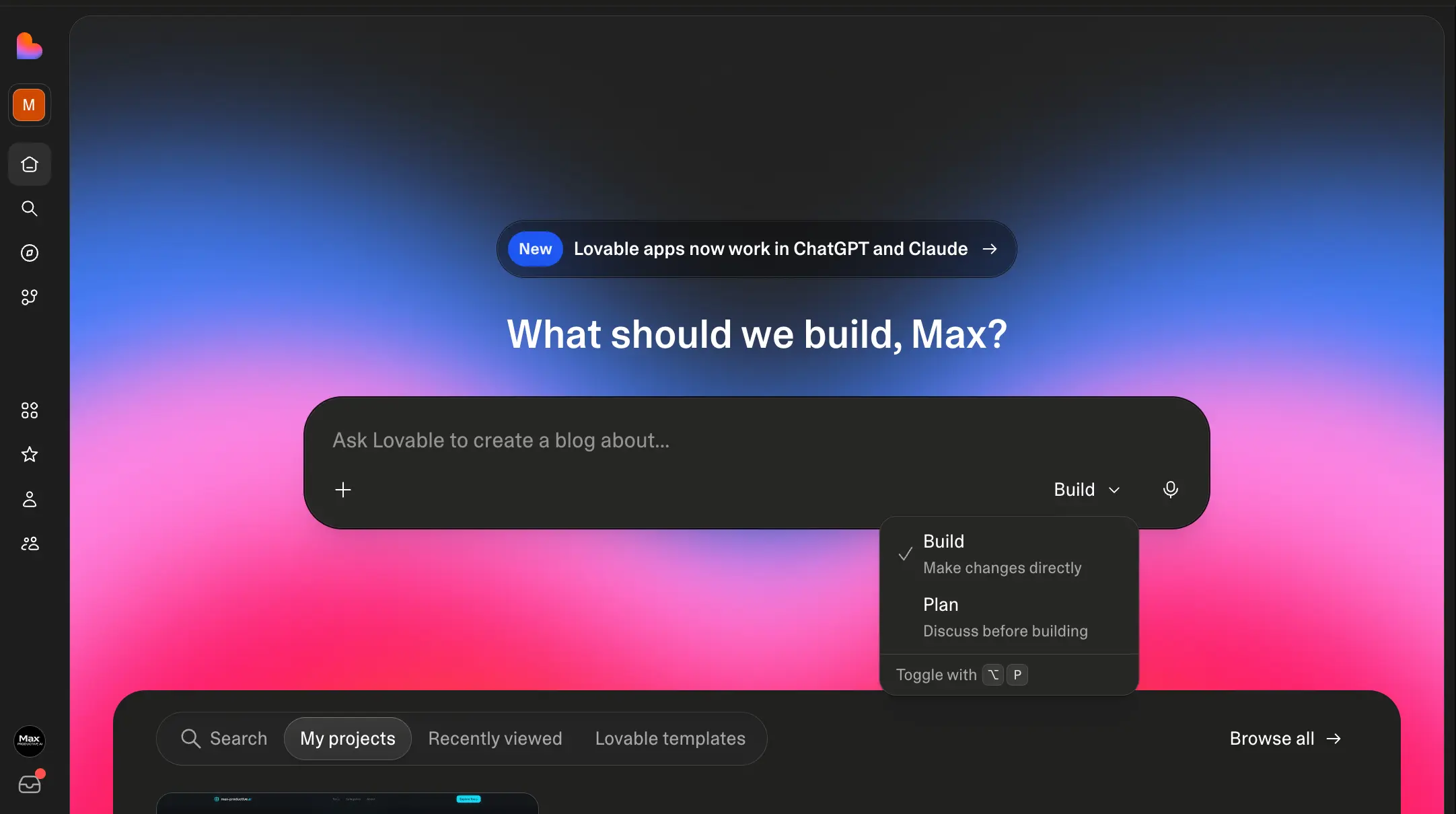
Two things happened eight days apart. On August 4, 2026, Lovable announced it was merging its separate balances, build credits on one side, a dollar-denominated Cloud and AI balance on the other, into one credit pool that everything draws from: your prompts, your hosting, and the AI features inside your deployed apps. Lovable's own post stresses that plan prices and credit costs didn't change. What changed is the feeling: a database that quietly bills daily fees now eats the same wallet as your builds, and a Reddit thread from June 18, during what looks like a phased rollout, described projects going inactive within 72 hours of the merge. Then on August 12, Lovable closed a $400 million Series C at a $13.3 billion valuation, led by Menlo Ventures and EQT's Scaleup Europe Fund, roughly doubling its December 2025 valuation. A company can be a rocket ship and still frustrate the person paying $25 a month; both facts are true here.
The complaints behind the searches are consistent and dated. Credit burn from regenerate cycles, where fixing what the AI broke costs the same credits as building. A widely shared April 25, 2026 thread arguing quality regressed as models were swapped. A September 2025 thread complaining that costs rose while output quality slipped. And, on August 6, 2026, the exit post: a user documenting their move to Cloudflare Pages, GitHub Actions, and Supabase directly, dismantling Lovable's bundle into services they control. For balance, the current numbers on Lovable's side: Free gives 5 build credits daily (capped at 30/month) plus 20 Cloud and 4 AI credits monthly, Pro is $25/month for 100 credits, Business $50/month, top-ups run $15 per 50 credits on Pro, and unused monthly credits expire two months after they're issued. If you read all of that and decide the product is still worth it, that's a legitimate conclusion, and Lovable's free tier is still where we'd tell most beginners to start. This article is for everyone else.
The 9 Lovable Alternatives at a Glance
| Tool | Billing unit | Free tier | Built-in backend | Code export | Our rating |
|---|---|---|---|---|---|
| Bolt.new | Tokens (roll over on Pro) | 1M tokens/mo, 300K/day | Choice of database providers | Zip + GitHub sync, every tier | 4.6 / 5 |
| Base44 | Message credits | 25 message credits/mo | Native: database, auth, hosting | GitHub sync (test backend portability) | 4.0 / 5 |
| Replit | Effort-based credits | Starter plan | Native: SQL database, Auth, deployments | Git-native from day one | — |
| Bubble | Workload Units | 50K WU, no live deploy | Native, proprietary | Apps stay on Bubble | 4.3 / 5 |
| Hostinger Horizons | Dynamic AI credits | None (paid from $6.99/mo) | Native since Feb 2026 | Unclear, ask before you commit | 4.2 / 5 |
| Softr | Seats + AI credits | Free plan, 5K records | Native (Softr Databases, Aug 2026) + 21 external sources | Hosted platform, no export | 4.2 / 5 |
| Vercel v0 | Credits | $5 in credits/mo | Full-stack since Feb 2026 | Standard Next.js, portable by design | — |
| Cursor | Seats + usage | Hobby plan | None, bring your own | Nothing to export, it's your repo | — |
| Emergent | Credits | 10 credits/mo | Via your own Supabase project | GitHub on paid tiers only | — |
1. Bolt.new — The Like-for-Like Swap With Tokens That Roll Over
If you want the Lovable experience without Lovable, Bolt.new is it: type a prompt in the browser, watch a full-stack app assemble itself, ship it. StackBlitz built Bolt on the same premise and it remains the fastest zero-setup path from idea to running app that we've used. The billing philosophy is the real difference. Bolt charges in tokens, not credits: the free tier gives 1 million tokens a month with a 300K daily cap, and Pro at $25/month starts at 10 million tokens with no daily limit, custom domains, your choice of database provider, and, the part Lovable refugees notice first, unused tokens roll over instead of expiring on a schedule.
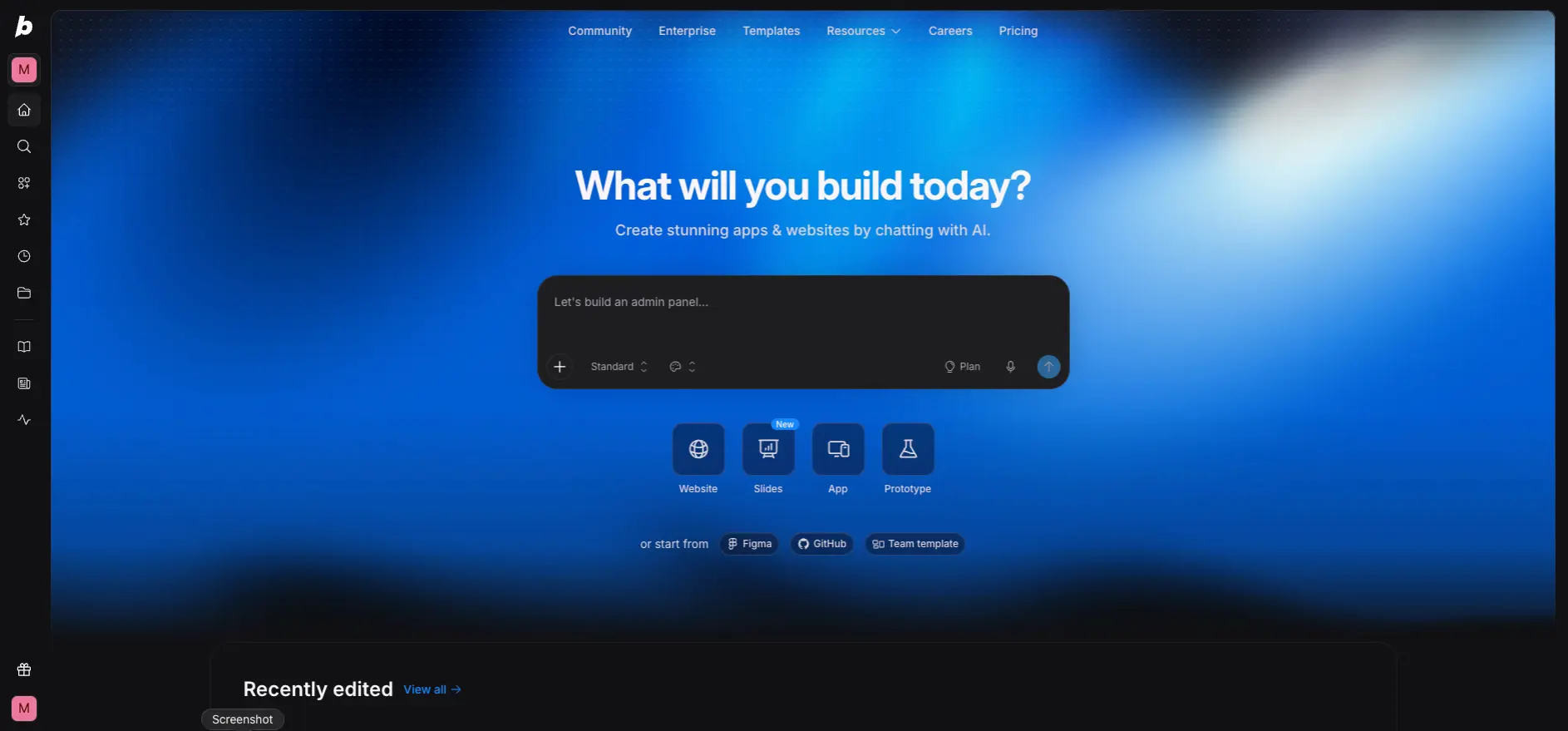
Now the honest part, because the complaint pattern here rhymes with the one you're escaping. The most common Bolt complaint in 2026 reviews is token burn: you keep paying while Bolt rewrites whole files to fix its own bugs, and one hands-on test saw the free daily allowance run out before a first build finished. Support responsiveness also draws mixed reviews, so treat the free tier as a service test as much as a product test. Same disease, different currency: the debugging loop costs money everywhere in this category, and anyone who tells you otherwise is selling something. On code ownership Bolt is genuinely good: zip download and GitHub sync work on every tier including free, though since an April 2026 storage-format change, newer projects lost the old "Open in StackBlitz" shortcut (GitHub sync and zip remain).
Choose Bolt over Lovable if: you want the identical workflow with rollover billing and framework flexibility, and you're disciplined enough to commit working versions to GitHub before asking the AI to "improve" anything. We rate it 4.6/5, the highest score we've given a Lovable alternative, and you can start on Bolt's free tier without a card.
2. Base44 — The All-in-One That Wix Bought for a Reason
Base44 answers the question Lovable outsources: where does the backend live? With Lovable, your database and auth typically mean a Supabase account and one more service that can misbehave. Base44 bakes the database, authentication, hosting, and deployment into the platform itself, managed through the same chat you build in. Wix paid roughly $80 million for it in June 2025 (plus earn-outs through 2029), and by May 2026 Wix's CFO was citing $150 million in ARR, up from $100 million in March. It even runs its own model now, Base1, announced on Wix's Q2 2026 earnings call. The aftercare worries from Base44's solo-founder days are settled; this is now a funded product line inside a public company, positioned deliberately apart from Wix's own website builder.
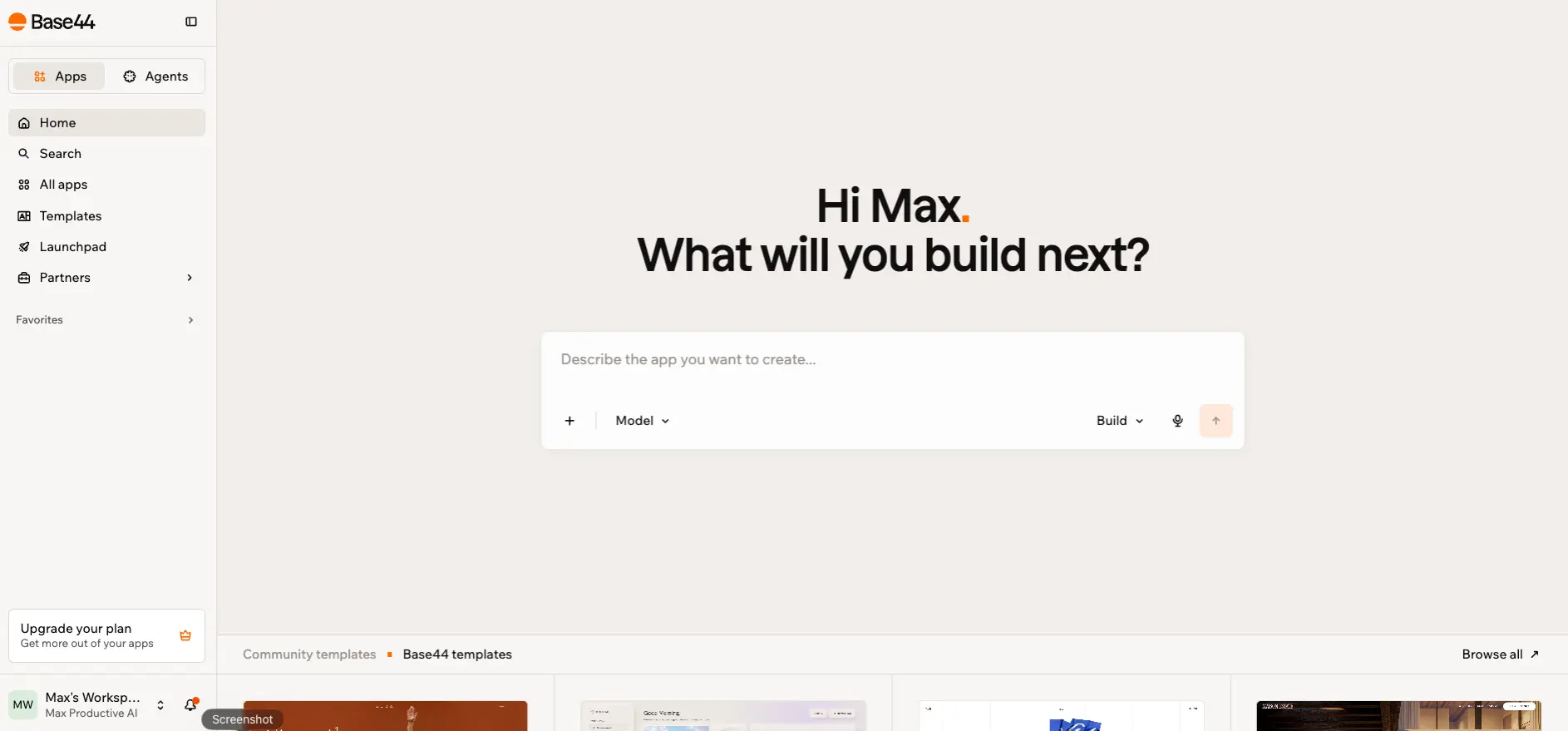
Pricing is friendlier at entry than Lovable's: Free includes 25 message credits a month and up to 5 apps, Starter is $16/month billed annually, Builder $40, Pro $80, Elite $160, with separate integration credits at each tier. Heavy builders should note the community reports of bills reaching $200/month during intense build phases, so the entry price is not the scaling price. On ownership, read carefully: Base44's own FAQ says you own everything with two-way GitHub sync, while several independent comparisons describe the managed backend as staying inside Base44's ecosystem. Both can be true, the generated code syncs out, the managed database and auth services don't come with it, so test an export on something small before you commit a serious project. The feature that keeps winning switchers is mobile wrapping: a May 19, 2026 Reddit thread documents a user who tried both and stayed with Base44 specifically after it added integrated mobile app wrapping.
Choose Base44 over Lovable if: you never want to see a Supabase dashboard, you want mobile apps from the same build, and you're fine trading some portability for a platform that manages everything. Our full Base44 review (4.0/5) covers it in depth, or try Base44's free plan and judge the chat-to-app flow yourself.
3. Replit — For Apps That Have to Survive Real Users
Replit pays us nothing. It's here because in thread after thread from mid-2025 through 2026, the community verdict is remarkably stable: Lovable for speed and polish on simple projects, Replit when it gets serious. An October 2025 Reddit comparison put it plainly: Lovable excels at rapid development and swift UI construction, Replit gives you control over the logic, backend, and deployment once your project becomes more intricate. A December 2025 thread was blunter, calling Lovable the choice "for amusement and lighthearted projects," while conceding Replit's first drafts look less pretty.
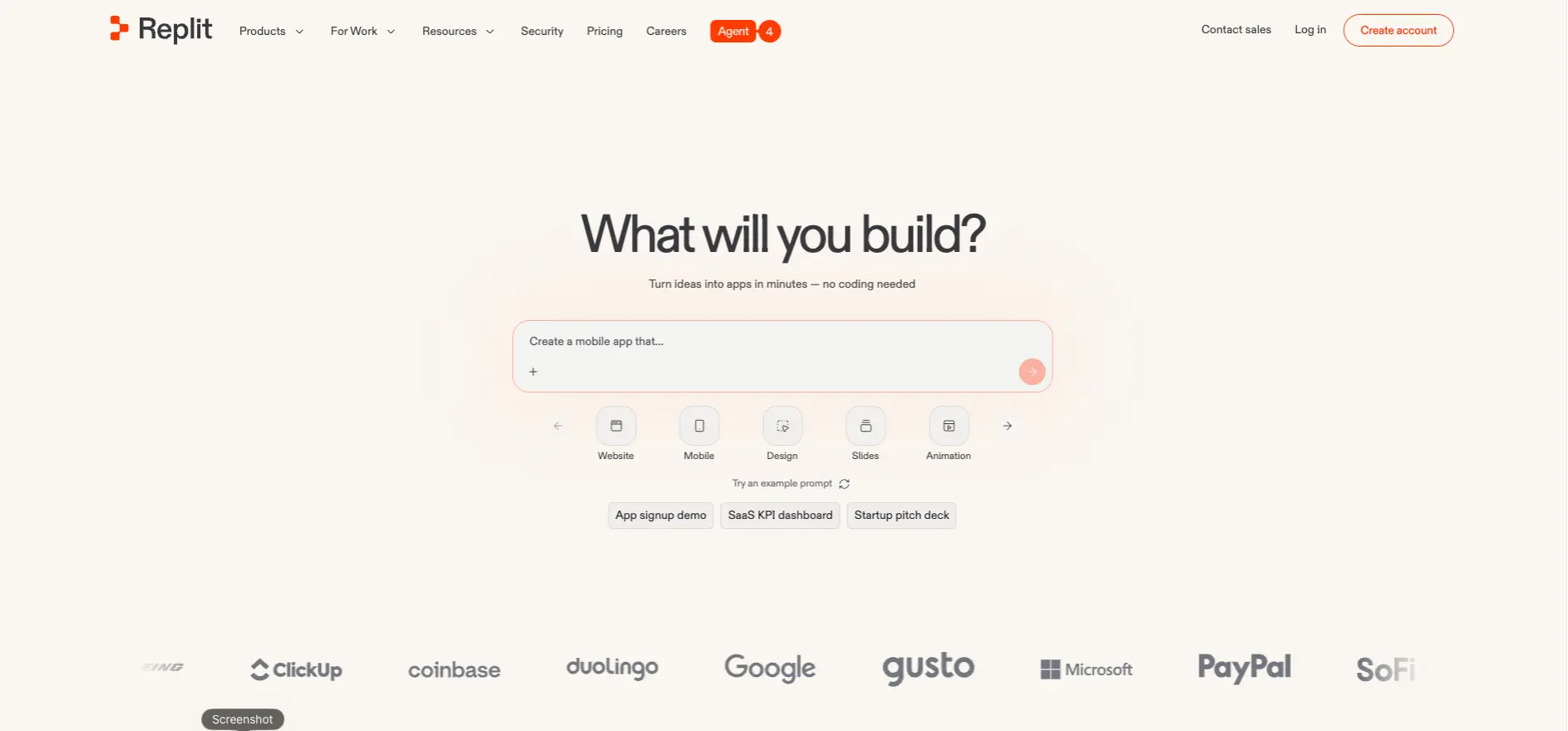
The substance behind that reputation is the backend. Replit ships a genuinely native stack: a fully managed SQL database reachable over a standard PostgreSQL connection string, two built-in auth options (Replit Auth for zero-setup sign-in, or a dedicated Clerk tenant when you need custom branding and separate dev/prod environments), and built-in deployments. Nothing bolted on, nothing to reconnect. Pricing runs Starter (free), Core at $25/month ($20 billed annually) with monthly credits included, and Pro at $100/month for teams, on an effort-based credit model, so complex agent tasks cost more than trivial ones. The company itself has been through the wringer, cutting headcount by half before revenue recovered, then raising $250 million at roughly a $3 billion valuation in late 2025, and it now publicly targets $1 billion in annual revenue. Learning curve is the honest cost: this is a development environment that happens to have an agent, not a chat window that happens to make apps.
Choose Replit over Lovable if: the app is the business, not a prototype of the business. Multi-user logic, background jobs, a database you'll still respect in a year: that's Replit territory, and it's the alternative we'd pick for anything customers log into daily.
4. Bubble — Deep Logic, No Vibe Coding, and a Billing Model to Study First
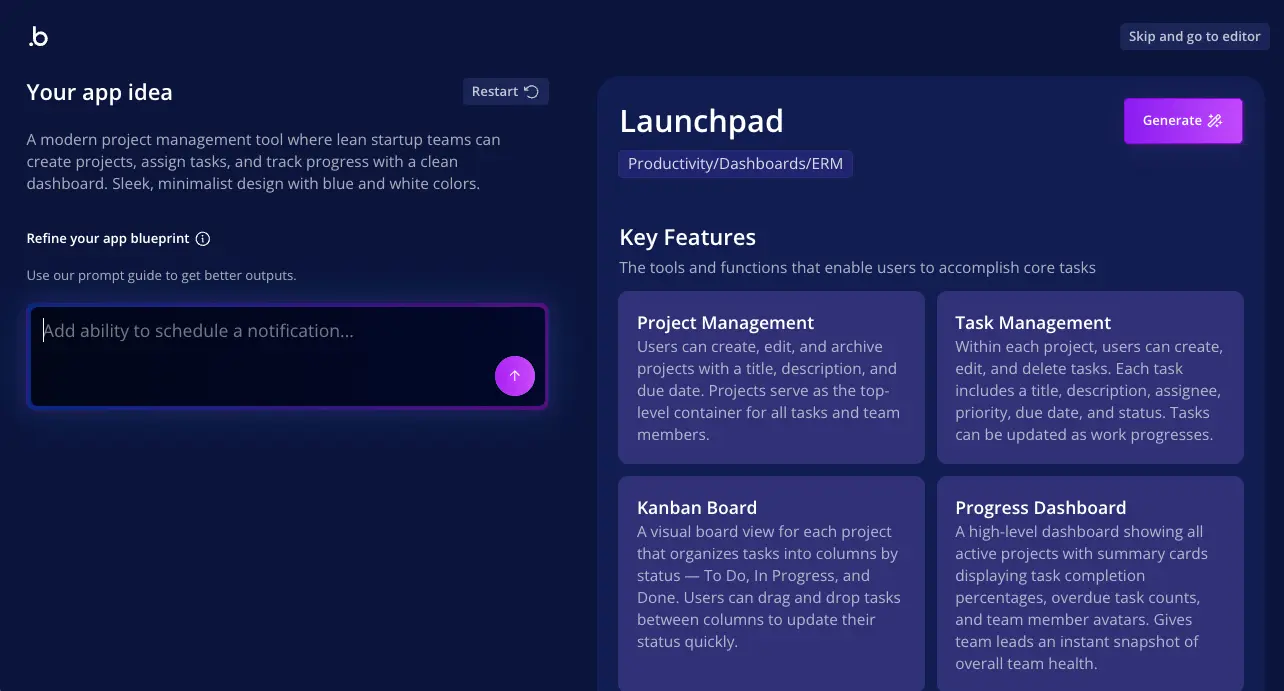
Bubble is a different species. It predates the AI wave, it's visual programming rather than prompt generation, and its logic and workflow depth still has no equal in no-code: multi-role permissions, complex conditional workflows, database relationships that would make a prompt-based tool weep. It has been adding AI on top, its AI Launchpad now generates an app blueprint from a description before you refine visually, which is exactly the hybrid a lot of frustrated vibe coders say they want:
Read this paragraph twice if you're leaving Lovable over billing, because Bubble's Workload Unit model is the most debated pricing in no-code. Official pricing (from Bubble's own manual, checked August 14, 2026): the free plan includes 50,000 WUs monthly but no live deployment, Starter runs $29/month billed annually ($32 monthly) on the web track, Growth $119/$134, Team $349/$399, with separate higher-priced mobile tracks. What a WU costs you in practice is the problem: the forums document a developer burning 7 million WUs in 24 hours from one configuration error, a January 2025 thread where Bubble support estimated $539/month for 3,000 users of a simple app, and overage rates that third parties report anywhere from $0.10 to $0.30 per 1,000 WUs while Bubble's own manual, in the text we could retrieve, publishes no simple rate at all. There's no code export either; Bubble apps live on Bubble. Its 2023 pricing change drew one of the longest discussion threads in no-code history, and as recently as August 2026 users were still asking the company to revisit WU pricing.
Choose Bubble over Lovable if: your app is mostly logic, roles, and data relationships, you'll invest the learning weeks, and you'll model your WU consumption before launch, not after. Our Bubble review (4.3/5) goes deeper, our Lovable vs Bubble comparison covers this exact matchup head-to-head, and Bubble's free plan lets you build (though not deploy) before paying.
5. Hostinger Horizons — The Budget All-in-One From a Hosting Company
Horizons is what happens when a hosting giant builds a vibe-coding tool: the boring infrastructure parts, hosting, domains, email, are the parts it's congenitally good at. It shipped a real built-in backend in February 2026 (database, authentication, file storage, email sending, no external services), and its 2026 updates added the ability to start a build by pointing it at an existing website URL, Stripe-powered subscription and paywall tools, and current-generation models (Gemini 3 and Claude Sonnet 4.5), which Hostinger says pushed its autofix success rate from 50% to 80%. Note the name carefully: Horizons is the AI app builder, a distinct product from Hostinger Website Builder, and the two get conflated constantly.
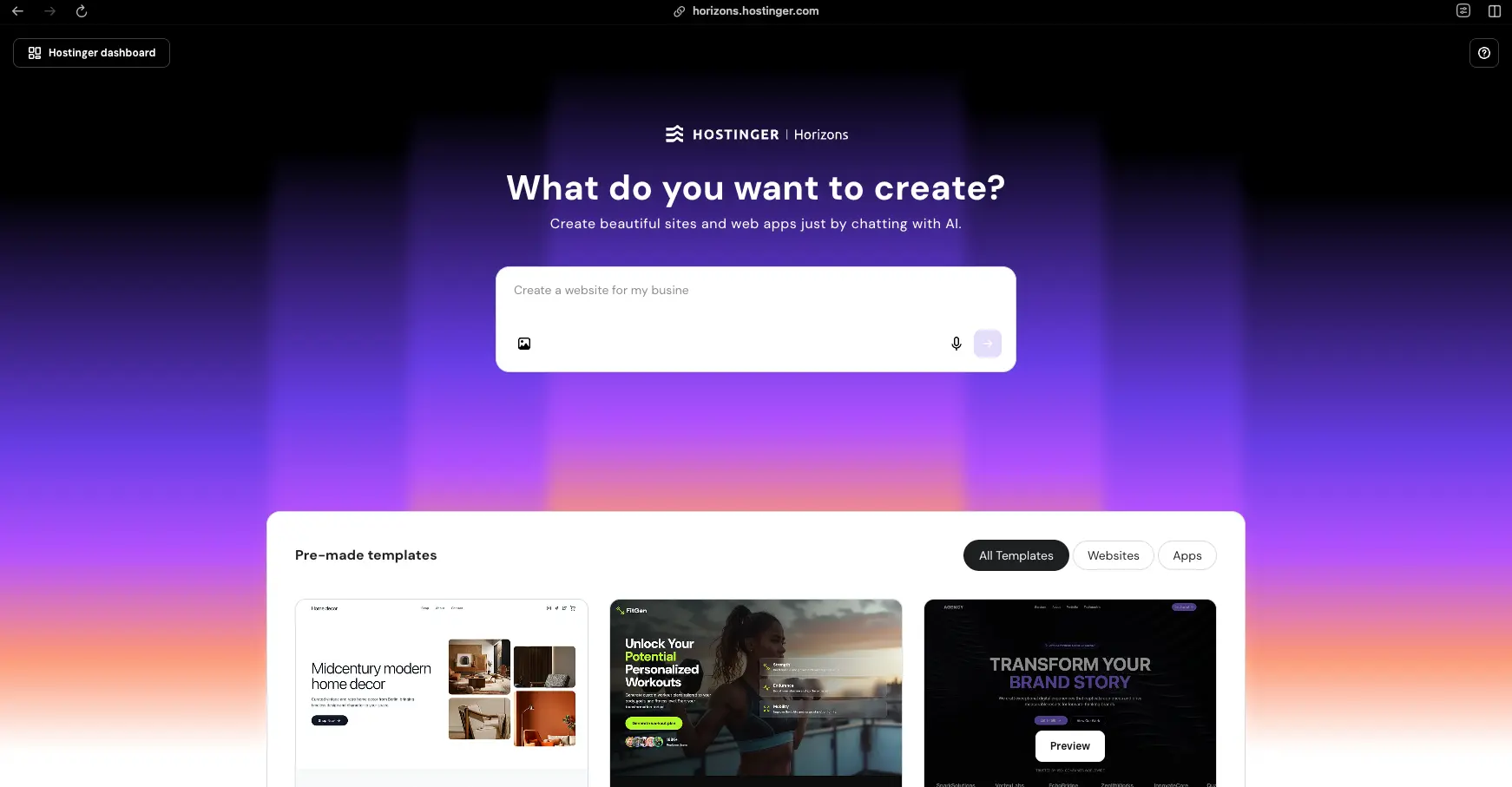
Pricing rewards a careful read. The four plans differ only in monthly AI credits, Explorer 30, Starter 70, Hobbyist 200, Hustler 400, and Hostinger's own docs confirm two things worth weighing: unused credits expire at the end of each billing period with no rollover, and credits are consumed dynamically based on the computing behind each request, so a small tweak costs less than a big build but you can't perfectly predict either. Headline prices float with Hostinger's ever-present promotions: roughly $6.99 to $79.99/month on promotional annual billing, with standard rates reported up to $99.99, so treat the price you see today as a promo until the checkout says otherwise. There's no free tier, which is unusual in this list.
Choose Horizons over Lovable if: you want the cheapest serious entry point, your app is straightforward, and bundled hosting, domain, and email genuinely simplify your life. Our Hostinger Horizons review (4.2/5) has the details, or check Horizons' current promo pricing, it changes often enough that we won't pretend today's number holds.
6. Softr — The One That Keeps Working When Your AI Credits Run Out
Softr does a different job than Lovable, and for a lot of people leaving Lovable, it's the job they actually had. It builds portals, internal tools, and dashboards on top of data, client portals, team directories, inventory views, and it's the only tool in this list whose pitch directly answers the category's defining complaint: because Softr is a hybrid of AI generation and a hand-editable no-code builder, you keep building when the AI credits run out. If the August 4 credit merge is the moment you started reading articles like this one, sit with that sentence for a second.
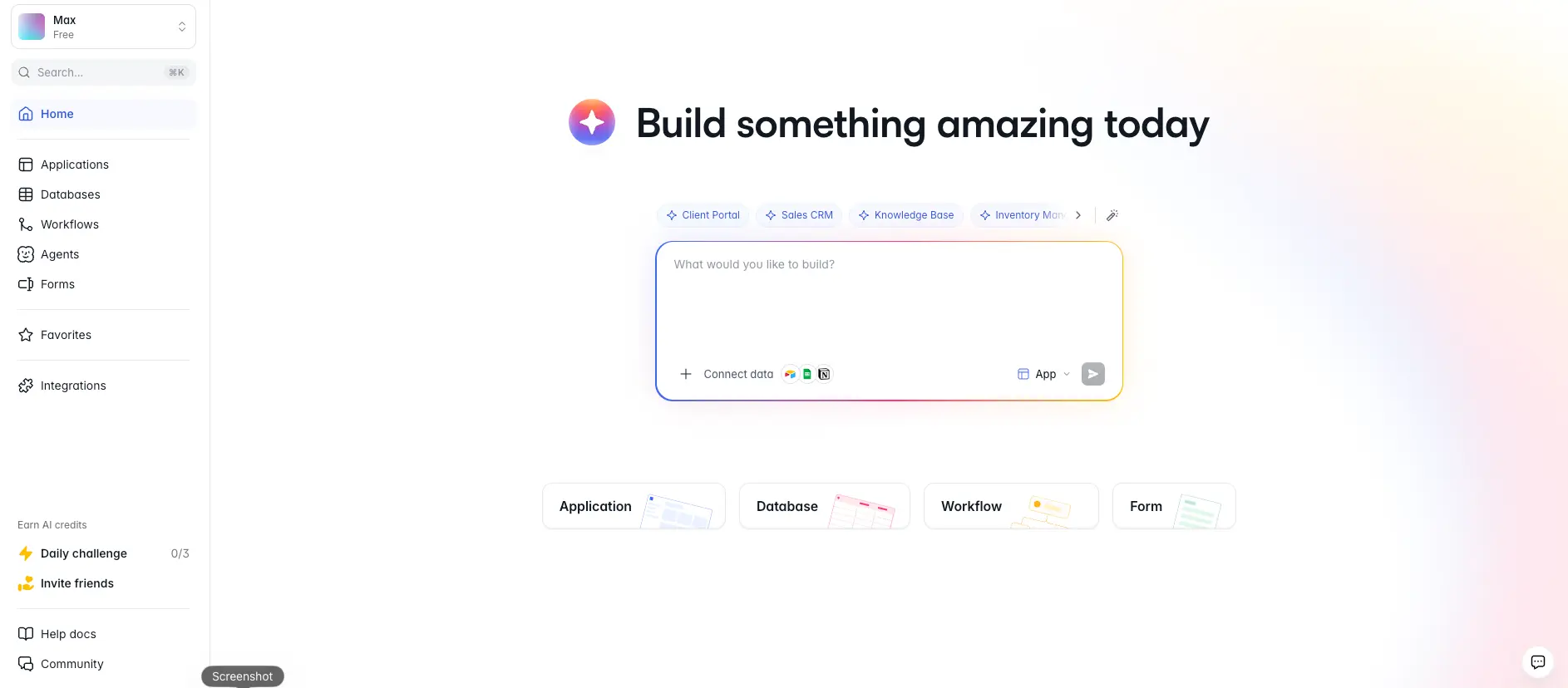
The big 2026 news landed on August 5: Softr Databases, a native backend so your data and your app live in the same place instead of syncing over a third-party API. Softr claims roughly 50 requests per second against the 3 to 5 typical of external no-code sources, and it ships on every plan: 5,000 records free, scaling to 1 million on Business. The 21+ external connections (Airtable, Notion, Google Sheets, SQL) still work if your data already lives somewhere. We've also covered its AI generation layer separately in our Softr Ask AI review. Pricing runs Free, Basic around $19/month, Pro $99, Business $329, and since Softr's page resisted our automated verification this week, confirm current tiers on the live pricing page. The trade-off is the mirror image of its strength: Softr is a hosted platform, there's no code export, and it will not build you an arbitrary consumer app from a prompt.
Choose Softr over Lovable if: the "app" you keep trying to prompt into existence is really a portal or internal tool on data you already have, and predictable seat-based pricing beats credit roulette for how you work. Full details in our Softr review (4.2/5), or start free on Softr with your own data.
7. Vercel v0 — Design-Forward React, Portable by Construction
v0 pays us nothing, and for a specific kind of builder it's the right answer anyway. Vercel's generator earned its reputation on front-ends: it produces genuinely design-forward React interfaces, and community threads have praised its contextual understanding above both Lovable and Cursor. The old objection, "it only does UI," expired in February 2026 when v0 went full-stack. Its structural advantage is portability: v0 emits standard Next.js, so the output is yours by construction, push it to your GitHub and host it anywhere, no export ceremony required.
Pricing is simple: free with $5 in monthly credits, Premium at $20/month with more credits, larger uploads, Figma import, and API access, Team at $30 per user. The complaint pattern is the familiar one for this category, iteration frustration: a May 2025 thread describes hours of looping fixes that went nowhere, so the same commit-early discipline applies here as everywhere. It's also worth knowing v0 assumes you live happily in the Vercel ecosystem; that's where deployment is one click and everything else is a shrug.
Choose v0 over Lovable if: the front-end is the product, you or someone near you can handle the rest of the stack, and owning plain Next.js from day one matters more than a managed backend.
8. Cursor (and Claude Code) — Not a Replacement, the Graduation
Cursor pays us nothing either, and it isn't really a Lovable alternative: it's what comes after. The pattern 2026 comparison writers keep documenting is the graduation workflow: prototype in Lovable, sync the codebase to GitHub, open it in Cursor, and harden it for production with an actual development environment. People who "switch" to Cursor aren't rejecting Lovable's output, they're growing past the chat window. Cursor's Tab autocomplete is the most-praised feature in the category (one analysis of 500+ posts found it cited as "the feature that ruined every other editor"), and its agent mode handles multi-file refactors that prompt-based builders mangle.
Pricing moved twice recently, so dates matter: individual plans run Hobby (free), Pro $20/month, with Pro+ around $60 and Ultra around $200, figures consistent across trackers but worth confirming on the live page since Cursor doesn't surface them all in plain text. Teams was restructured on May 31, 2026 (Standard seat $32/month annual, new Premium seat $96), and on July 16, 2026 Cursor permanently doubled included usage for its first-party models. Complaints center on usage limits pushing upsells, trust in the Auto model router, and unsettling reports of files reverting. The adjacent option worth naming: Claude Code, Anthropic's terminal-based agent, bundled with Claude's subscription plans (Pro from $17/month billed annually, heavier Max tiers at $100 and $200), with benchmark write-ups reporting it used roughly 5.5x fewer tokens than Cursor on identical tasks. Both assume someone reads code; neither has a visual builder, a database, or hosting.
Choose Cursor over Lovable if: you've stopped asking "how do I build this faster" and started asking "how do I stop shipping bugs." That question means you've graduated, congratulations, it only gets more expensive from here.
9. Emergent — The Autonomous Wildcard
Emergent (emergent.sh, not the defunct emergent.ai domain) makes the boldest promise in this list: describe the app, and its agent builds the whole thing while you watch, front to back, with the longest leash of any tool here. When it works, the autonomy is genuinely impressive, and onboarding speed gets praised even in otherwise critical reviews. Under the hood it's a bring-your-own-Supabase model: you connect your own Supabase project and Emergent configures the schemas, auth flows, and storage on top, which means your data layer is standard PostgreSQL you control. Pricing: free with 10 monthly credits, Standard $20/month ($17 annual) for 100 credits, Pro $200/month for 750, with GitHub integration gated to paid tiers.
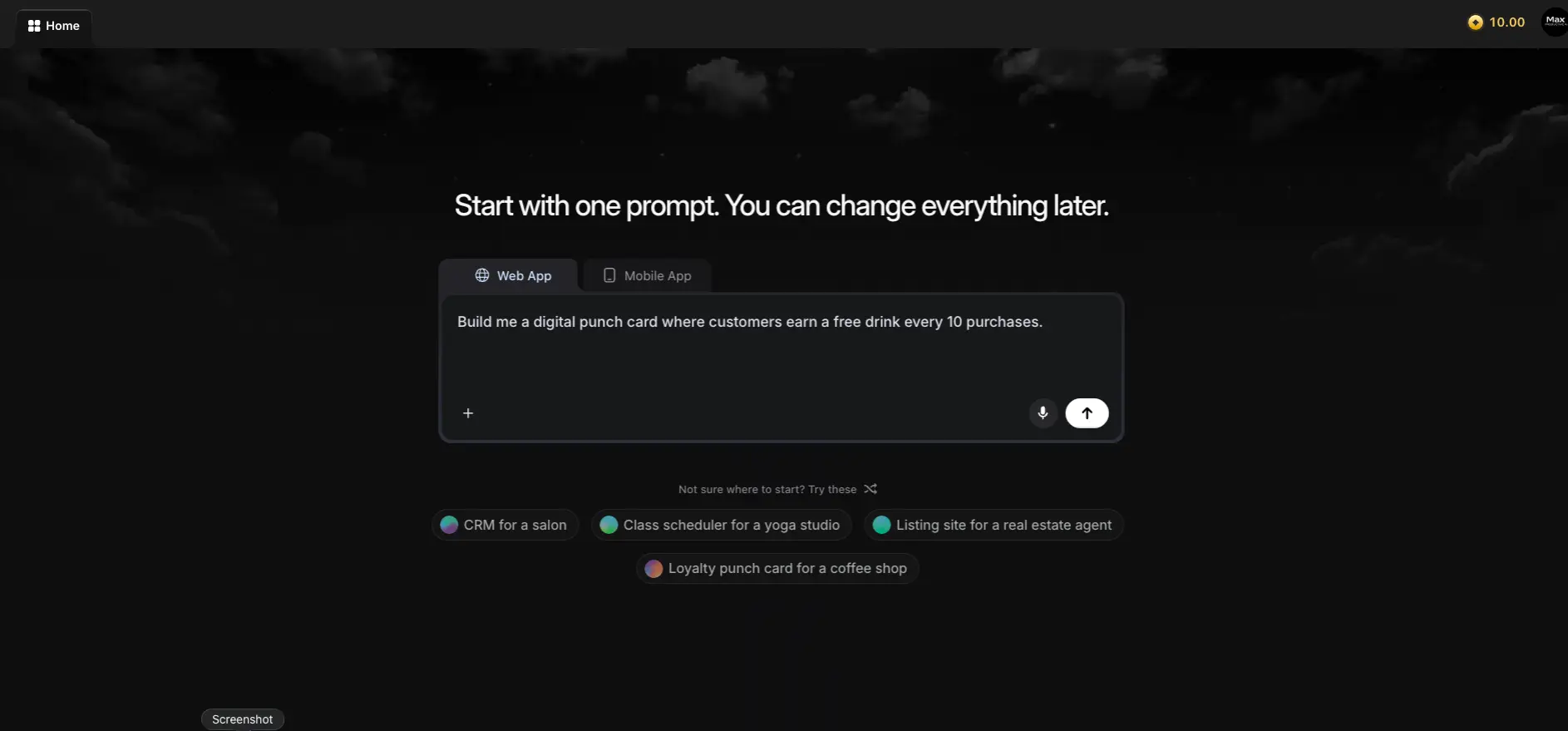
A note on maturity, and yes, Emergent pays us a commission while we write it. Community threads from 2025 report credits moving quickly on small tasks and the occasional agent pause mid-build, and Emergent's own help pages disagreed with each other on free-tier credit counts when we checked, the kind of rough edges you'd expect from a product scaling this fast. None of it is disqualifying, but it shapes our advice: start with the free 10 credits, watch the burn rate on one real task, and keep an eye on your plan as the product evolves. If you want maximum autonomy and don't mind a platform still finding its footing, Emergent's free tier is the cheap way to find out whether you're its kind of builder.
Choose Emergent over Lovable if: you want an agent that runs further on its own than anything else here, your backend living in your own Supabase appeals to you, and you'll treat the first month as a paid trial rather than a commitment.
Free Lovable Alternatives: What You Actually Get at $0
Almost everything here has a usable free tier, with very different ceilings. Bolt's is the most generous for pure building (1 million tokens a month, 300K daily). Base44 gives 25 message credits and up to 5 apps. Replit's Starter plan lets you feel out the Agent. Emergent's 10 credits are enough for one honest test. v0 hands you $5 in credits monthly, Softr's free plan includes 5,000 database records and real published apps, and Bubble's free tier lets you build with 50,000 WUs but not deploy live. Horizons is the exception, paid only. And the truly free path exists, it just isn't a product: the August 6, 2026 exit thread we cited earlier describes replacing Lovable with Supabase's free tier, Cloudflare Pages, and GitHub Actions directly. That stack costs $0 and your weekends; whether that's a bargain depends on which you have more of.
What Reddit Actually Says About Leaving Lovable
The question resurfaces constantly, r/lovable, r/nocode, and r/vibecoding have run near-identical threads from mid-2025 through last week, and the dated arc tells the story better than any single post. July 22, 2025: "Disappointed by Lovable 2.0... any better alternatives?" draws 85 answers. December 29, 2025: "Found some Lovable alternatives that are actually new." February 6, 2026: a thread hunting for stronger alternatives pulls 78 answers, with the top answer actually defending Lovable as "a fantastic FE dev tool assuming you understand" what it's for. Then the 2026 escalation: an April 25 thread arguing recent model changes hurt output quality, the June 18 thread on the credit merge with projects going dark inside 72 hours, and the August 6 exit post.
The consensus, such as it is: Lovable's defenders hold the line on speed and UI quality for the first 60 to 70% of a build, and that defense appears even inside hostile threads. The leavers split into three tribes: pragmatists heading to Bolt or Base44 for a similar experience with different billing, builders heading to Replit because their app "actually needs to work" (a phrase that recurs almost word for word across threads), and graduates exporting to Cursor or a self-assembled stack. And a March 2026 mega-thread reminds everyone that the grass is patchy everywhere, cataloguing rough spots, bugs, security worries, and credit complaints, across the entire category, including several tools on this list. Weigh all of it as what it is, unverified individual experiences, but the pattern has held for a year and maps cleanly onto the documented differences above.
A Note on the Vendor "Alternatives" Pages You'll Find in Search
It's worth naming what you're wading through when you search this topic. The top-ranking article is by Zite, an app builder that, in its own list and its own comparison tests, does rather well. Replit ranks with an in-house "Lovable alternatives" guide. WeWeb's entry concludes WeWeb is the best Lovable alternative. Bubble compares itself against Lovable across twelve categories and finds much to like. Lovable itself publishes the list of eight platforms it considers worth your attention. None of these pages is worthless, vendors know their own products, but every one of them was written to end with you in their checkout. Ours ends with a recommendation that depends on your project, seven internal reviews with ratings we stand behind, and three tools we recommend without earning a cent from them. That's the whole difference, and in this category right now, it's rarer than it should be.
How to Choose Your Lovable Alternative
Match the tool to the reason you're leaving, not to feature lists. Leaving over the credit model, but you love the workflow: Bolt.new, rollover tokens, same experience. Leaving because the Supabase-and-services juggling act broke one time too many: Base44, everything managed in one place. Leaving because your prototype needs to become a product: Replit, or export to Cursor if you can read code. Leaving over cost, full stop: Hostinger Horizons at promo pricing, with clear eyes about credit expiry. Leaving because what you're really building is a portal or internal tool: Softr, and its seat-based pricing ends the credit anxiety entirely. Front-end is the whole product: v0. Curious about maximum agent autonomy and comfortable with rough edges: Emergent, free tier first. And if you read this far and realized your complaints are survivable: staying on Lovable is a fine decision too, it's still our highest-rated tool in this category, and its free tier costs nothing to keep.
Final Verdict — The Best Lovable Alternatives in 2026
| Closest like-for-like swap | Bolt.new (same workflow, rollover tokens, 4.6/5) |
| Best all-in-one replacement | Base44 (native backend, mobile wrapping, $16/mo entry) |
| Best for production apps | Replit (native SQL + auth + deploys, no commission to us) |
| Best if you're done with AI credits | Softr (keeps building without credits, native database) |
| Best budget entry | Hostinger Horizons (from $6.99/mo promo, hosting included) |
| Best graduation path | Cursor or Claude Code (export from Lovable, harden for production) |
Bottom line: Lovable is a 4.7/5 product with a billing model that finally exhausted some of its earliest fans, and the August 2026 credit merge turned a grumble into a migration. The good news is the alternatives have specialized: Bolt.new for the same magic with fairer token math, Base44 for a managed everything, Replit for apps with a future, Softr for the portal you were actually trying to build. Every one of them has a free tier or cheap entry except Horizons, so the honest way to settle it costs an afternoon: take the one build Lovable kept fumbling, run it through your top two picks from this list, and let the results decide. Whatever you choose, sync your work to GitHub from day one, in this category, that habit is worth more than any tool choice on this page.