Klaviyo vs Omnisend: The 7 Differences That Actually Decide It for Your Store
Klaviyo's move to active-profile billing sent thousands of store owners hunting for alternatives, and Omnisend built its entire pitch on being the affordable one. We opened accounts on both platforms, checked every price against the live calculators in August 2026, and boiled the decision down to the seven differences that actually change what you should buy.
The short answer, as of August 2026: Omnisend is the better pick for most small and mid-sized ecommerce stores. It costs less at every published list size, includes live chat support around the clock on every plan, including the free one, and its free tier ships with web push and SMS credits. Klaviyo earns its premium once your store has real order history: its predictive analytics, deeper segmentation, and native WhatsApp channel are things Omnisend simply doesn't offer. But the predictive features stay locked until your data qualifies, which most new stores' data doesn't.
Best value for most stores: Omnisend
Omnisend undercuts Klaviyo at matched list sizes, cut its SMS rates in half in May 2026, and answers support chats around the clock on every tier. If you run a lean Shopify or WooCommerce store and want email, SMS, and web push working this week, this is the pragmatic choice.
Best for data-rich brands: Klaviyo
Klaviyo predicts each customer's lifetime value, churn risk, and next order date, then lets you build flows on those predictions — capabilities Omnisend doesn't attempt. Add WhatsApp, mobile push, and the July 2026 Composer AI, and the premium makes sense for brands with the purchase data to feed it.
| Tool | Built For | Entry Price | Rating |
|---|---|---|---|
| Omnisend | Lean stores wanting value + support | $16/mo (500 contacts) | 4.5 / 5 |
| Klaviyo | Established stores with purchase data | $20/mo (500 profiles) | 4.8 / 5 |
Prices verified August 2026 against both live pricing calculators
One thing worth knowing upfront: both platforms pay this site comparable affiliate commissions, so we earn roughly the same whichever one you pick. That's precisely why this comparison can afford to be about your store instead of our revenue.
Search for Klaviyo vs Omnisend and almost everything on page one has a horse in the race: Omnisend's own blog post and YouTube videos, a comparison written by Drip (a competing email platform), and affiliate pages that haven't been updated since before either product's 2026 changes shipped. We don't sell an email platform. We rated Klaviyo 4.8/5 and Omnisend 4.5/5 in our standalone reviews, we run accounts on both, and every screenshot below comes from our own dashboards, not a vendor press kit.
Why This Comparison Looks Different in 2026
These are the two names that dominate ecommerce email. Klaviyo is now a public company (NYSE: KVYO) that reported $358 million in revenue for Q1 2026, up 28% year over year, serving more than 196,000 customers. Omnisend is a privately held challenger that says over 150,000 ecommerce brands use its platform — a self-reported figure, but a credible one given how often it appears in Shopify merchants' stacks.
What makes 2026 the year this decision changed: Klaviyo's February 2025 switch to active-profile billing raised bills sharply for stores carrying large lists, and the complaints are still landing on Reddit a year and a half later. Since then, both platforms have kept moving: Klaviyo overhauled how it bills mobile messages in July 2026 and shipped a wave of AI products the same month, while Omnisend cut its SMS prices in half in May 2026 and rolled its Reports AI assistant out to all paid users in August. Most comparisons you'll find were written before any of that happened. They're describing products that no longer exist.
Klaviyo vs Omnisend at a Glance
| Klaviyo | Omnisend | |
|---|---|---|
| Our rating | 4.8 / 5 | 4.5 / 5 |
| Free plan | 250 profiles, 500 monthly sends, small mobile-message allowance | 250 contacts, 500 emails/mo, SMS credits + web push included |
| Channels | Email, SMS/MMS, mobile push, WhatsApp | Email, SMS/MMS, web push |
| Predictive analytics | ✓ CLV, churn risk, next-order date | ✗ Rules-based segmentation only |
| 24/7 live chat support | ✗ Tiered by plan | ✓ Every plan, including free |
| Free migration service | ✗ | ✓ Done-for-you on paid plans |
| 2026 AI additions | Composer, Customer Agent, K Social | Reports AI, Forms AI, MCP integration |
| Deliverability (EmailTooltester 2026) | 5 stars — ranked 1st | 4.5 stars — ranked 2nd |
1. Pricing — Two Models That Diverge as You Grow
The single most important thing to understand is that these platforms don't just charge different amounts — they count differently. Omnisend bills you for contacts, the familiar way. Klaviyo bills for active profiles: everyone in your account who isn't suppressed for email. That includes people who unsubscribed but were never suppressed, and people who signed up years ago and never opened a thing. One clarification worth making, because half the internet gets it wrong: Klaviyo's own documentation is explicit that suppressed profiles do not count toward your bill. The horror stories about paying for suppressed contacts conflate suppression with plain inactivity. The practical takeaway is simpler: if you're on Klaviyo, suppress or delete the dead weight regularly, because on this billing model list hygiene is literally money.
At the entry level the gap is modest: a few dollars a month between the two for a 500-contact list, and Omnisend often runs intro promotions below its list price (an $11.20/month three-month rate was live when we checked; it reverts afterward, so budget on the list price). The gap widens as your list grows:
| Contacts | Klaviyo (Email plan) | Omnisend (Standard) |
|---|---|---|
| 500 | $20/mo | $16/mo |
| 1,000 | $30/mo | — |
| 2,500 | $60/mo | $44/mo |
| 5,000 | $100/mo | $81/mo |
| 10,000 | $150/mo | $132/mo |
| 25,000 | $400/mo | $282/mo |
| 50,000 | $720/mo | — |
Email-only plans, monthly billing, verified August 2026 on both live calculators. Klaviyo's Email + SMS plans run roughly $15/month more at each tier. "—" = not published at this size; check the calculator for your exact count.
Two structural details round out the picture. Klaviyo's self-serve tiers bill monthly, with no annual-prepay discount advertised, and if your active profiles exceed your tier, the account moves up to the next one. Omnisend prompts you before an upgrade happens rather than charging silently, and its Pro tier switches to unlimited email sends under a fair-use policy. By roughly 25,000 contacts, the yearly difference between the two platforms is four figures — real money that either buys you Klaviyo's extra capabilities or doesn't, which is what the next six sections are for.
Who wins: Omnisend, at every published size. The question the rest of this article answers is whether Klaviyo's extras justify the spread for your store.
2. Automation — Both Ship Libraries, Klaviyo Goes Deeper
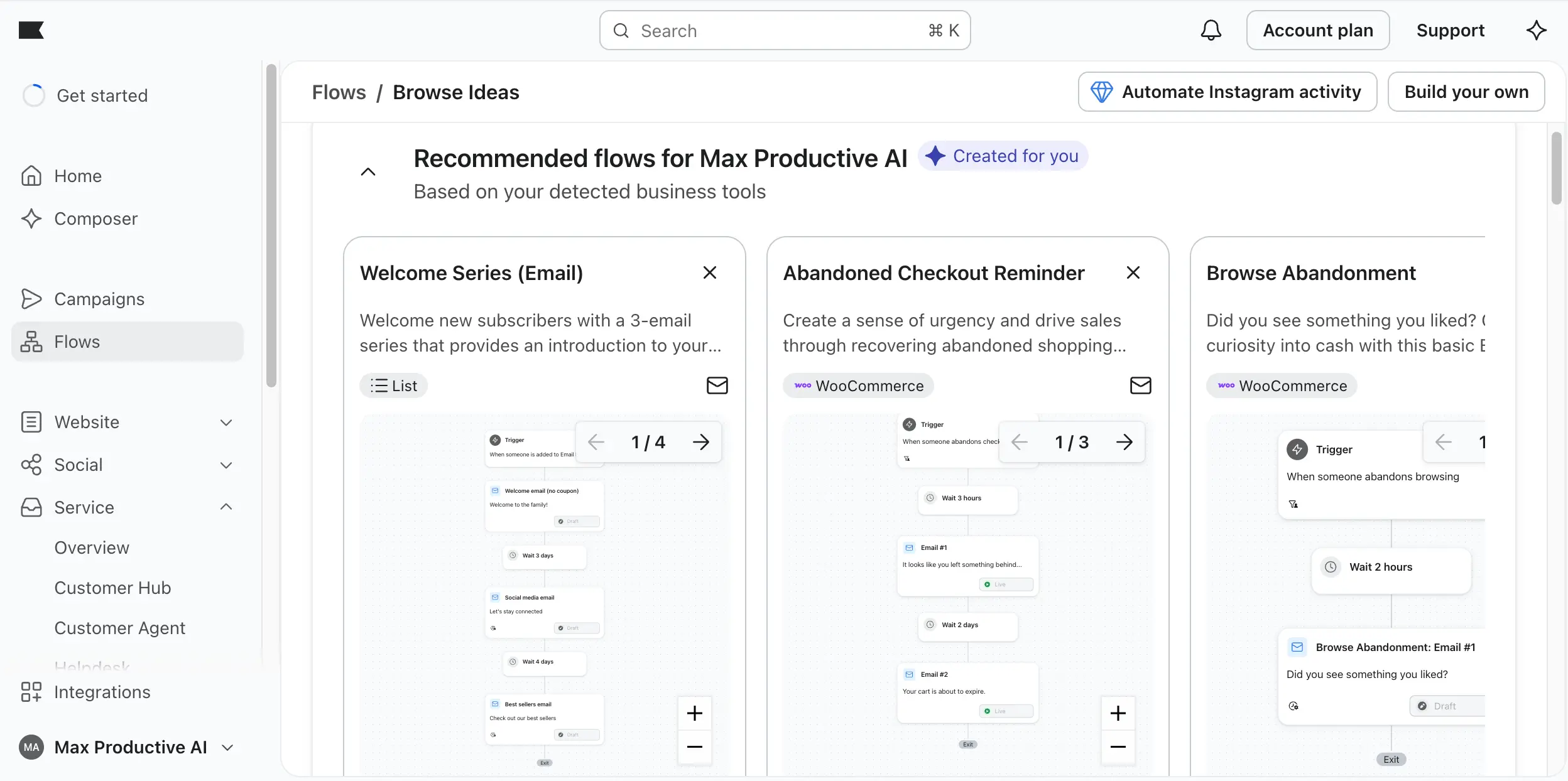
Neither platform makes you build cart-abandonment logic from scratch. Klaviyo's Flows section opens with a Browse Ideas library that recommends sequences based on the tools it detects in your stack — in our account it immediately proposed a welcome series, an abandoned-checkout reminder, and a browse-abandonment flow wired to our store integration:
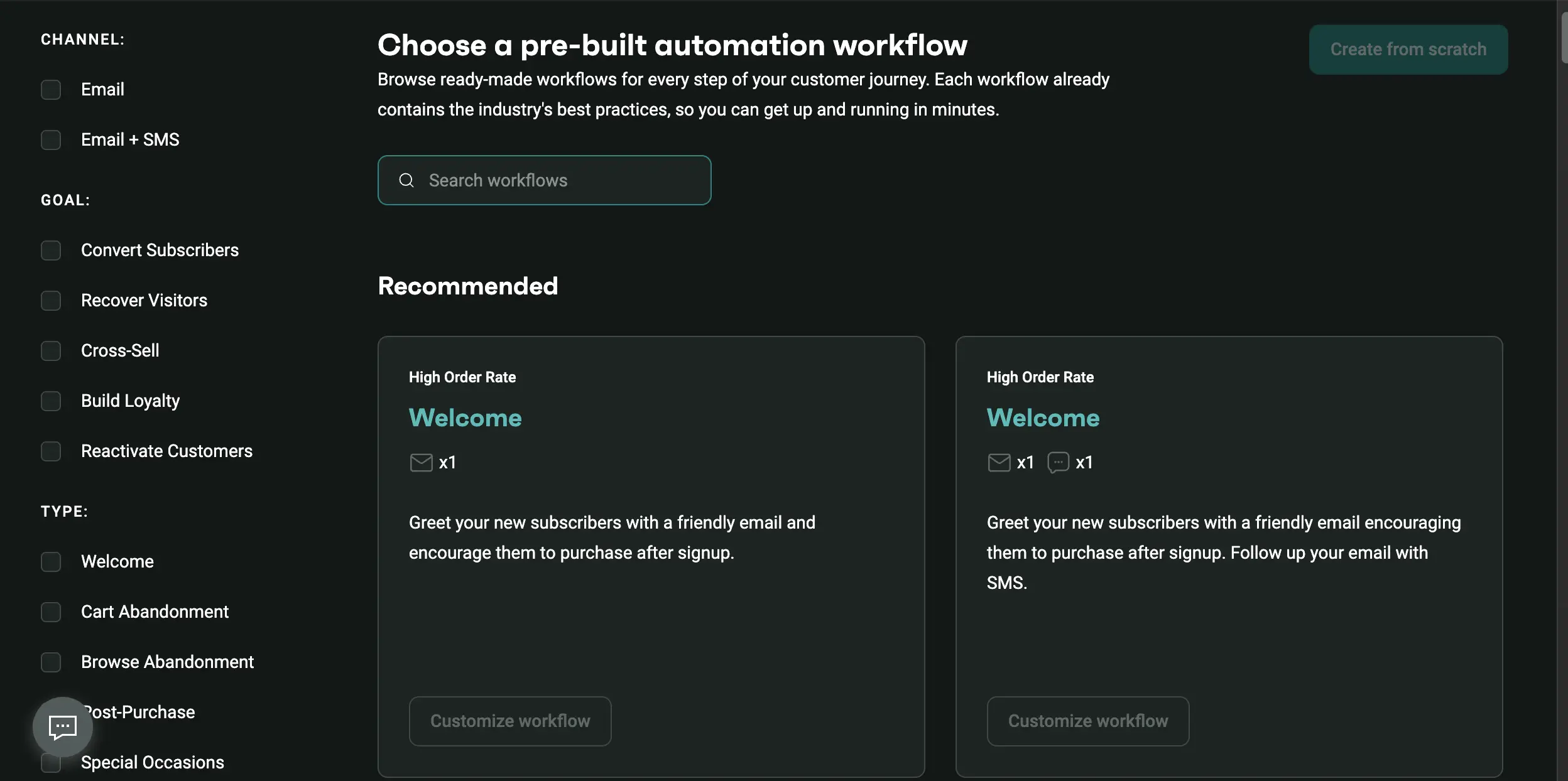
Omnisend's equivalent is a pre-built workflow library filtered by channel, goal, and type — welcome, cart abandonment, browse abandonment, post-purchase, special occasions — with email-only and email + SMS variants of each recipe sitting side by side:
Both builders handle conditional splits and A/B testing inside a workflow, and for the automations that drive most ecommerce revenue — welcome, abandonment, post-purchase — the two are functionally equivalent. The separation appears at the top end: Klaviyo lets you use predictive properties as flow conditions, so a sequence can branch on "churn risk is high" or "predicted next order is within 30 days" rather than only on what a customer already did. Since July 2026, its Composer agent can also audit existing flows and propose fixes. Omnisend's splits work on behavior and profile data, which covers most real-world cases but can't act on a prediction.
Who wins: tie for the automations that matter most. Klaviyo, once your store qualifies for predictive data and you actually build on it.
3. Segmentation and Predictive Data — Klaviyo's Real Moat, With a Catch
This is the genuine capability gap between the two products. Klaviyo's data platform computes four predictive scores per customer profile: predicted lifetime value, historic CLV, total CLV, and a churn-risk probability — refreshed on a rolling basis and usable directly as segment conditions. Omnisend offers unlimited rules-based segments, pre-built lifecycle stages, a real-time Live View of on-site behavior, and an AI segment builder that turns a plain-language prompt into segment logic. All useful. None of it predicts anything.
Here's the catch that vendor comparisons skip, documented in Klaviyo's own Academy materials: predictive analytics only activates once your account has a connected ecommerce integration, at least 500 unique customers who have placed an order, 180 days of order history, orders within the last 30 days, and a base of repeat purchasers. If you're launching a store, the headline feature you'd be paying Klaviyo's premium for is mathematically unavailable to you — possibly for your entire first year. That single fact should redirect a lot of new stores toward Omnisend without any further analysis.
Who wins: Klaviyo, clearly — but only after your data qualifies. Before that, the moat is theoretical and you're paying for it anyway.
4. SMS, Push, and WhatsApp — Breadth vs Cost per Message
Klaviyo covers more ground: email, SMS/MMS, mobile app push, and — uniquely in this matchup — native WhatsApp, which it kept expanding through 2026 with a deliverability hub, channel-affinity routing, and WhatsApp support inside its omnichannel platform. For brands with international audiences, WhatsApp alone can settle this comparison, since Omnisend doesn't offer the channel at all.
Omnisend's channel set is narrower — email, SMS, and web push — but the economics favor it. Web push is included even on the free plan. US SMS runs on transparent pay-as-you-go rates between $0.007 and $0.009 per message depending on volume, after the company cut prices by half in May 2026. Klaviyo, meanwhile, replaced its SMS credit system with per-message dollar pricing on July 13, 2026 — a change that hits existing subscribers on billing cycles after August 13. It's too early to call the new rates better or worse for every store, but it means any SMS cost comparison written before mid-2026 is now obsolete, ours included if you're reading this in 2027: check both rate cards for your sending country.
Who wins: Klaviyo on breadth, Omnisend on cost and simplicity. Heavy SMS senders on a budget lean Omnisend; WhatsApp-dependent brands have no choice but Klaviyo.
5. AI Features — 2026 Changed This Category for Both
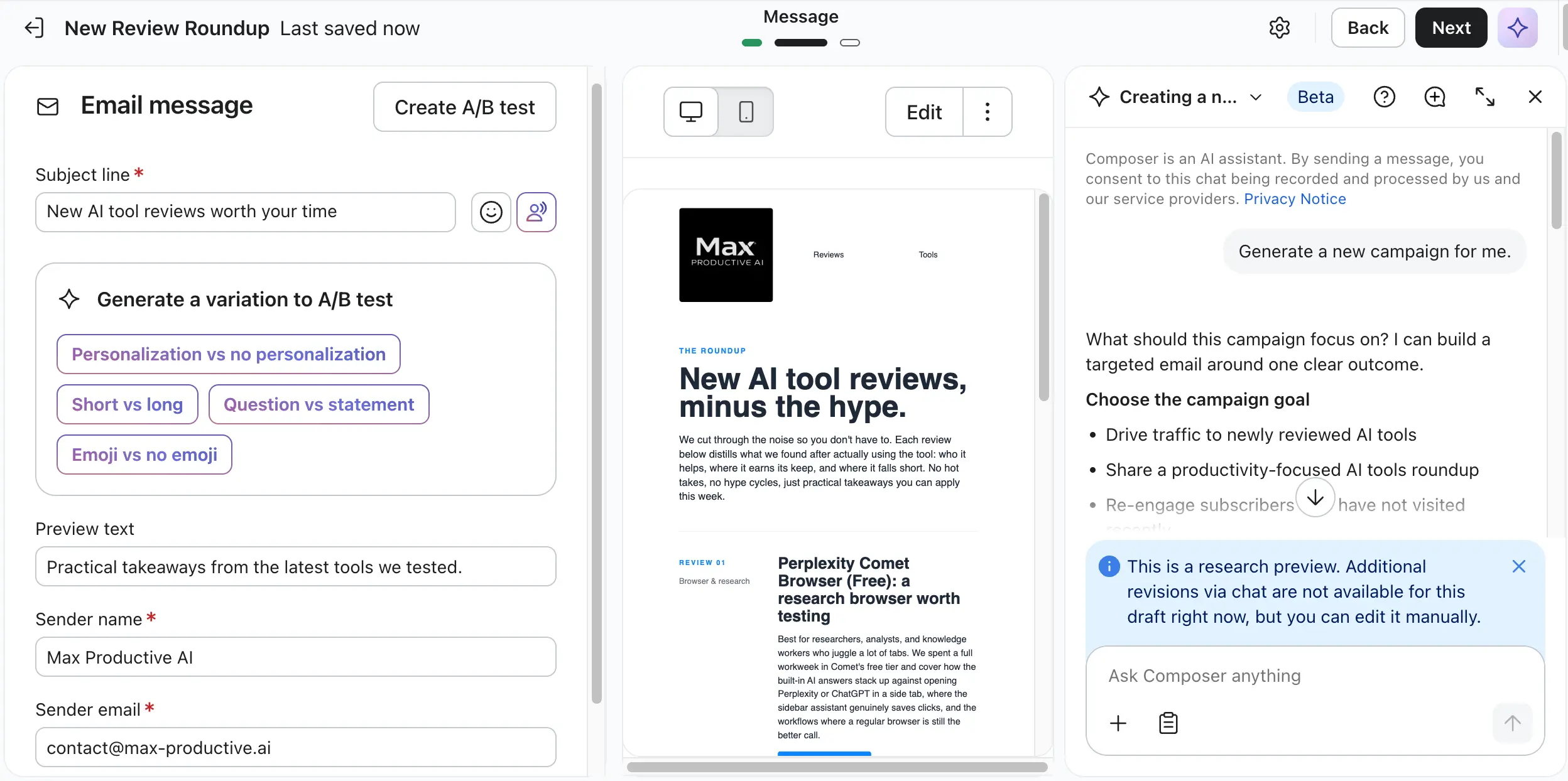
Almost nothing written about these platforms' AI is current, because the interesting parts shipped weeks before this article. Klaviyo's July 16, 2026 launch of Composer put a marketing agent inside the product that generates campaigns, flows, and segments from your existing data. Here it is in our account, mid-conversation while building a campaign:
Around it, Klaviyo shipped Customer Agent — an AI that resolves shopper questions across chat, email, SMS, and WhatsApp, trained automatically on your storefront (fully featured for Shopify first) — and made its social product generally available on June 30, 2026. It's an ambitious spread, and clearly where the company is pouring its public-company resources.
Omnisend's 2026 AI is less flashy and more immediately practical. Reports AI, its natural-language analytics assistant, reached all paid users on August 6, 2026. You ask "which channel drove the most revenue last month?" and get an answer instead of building a report:
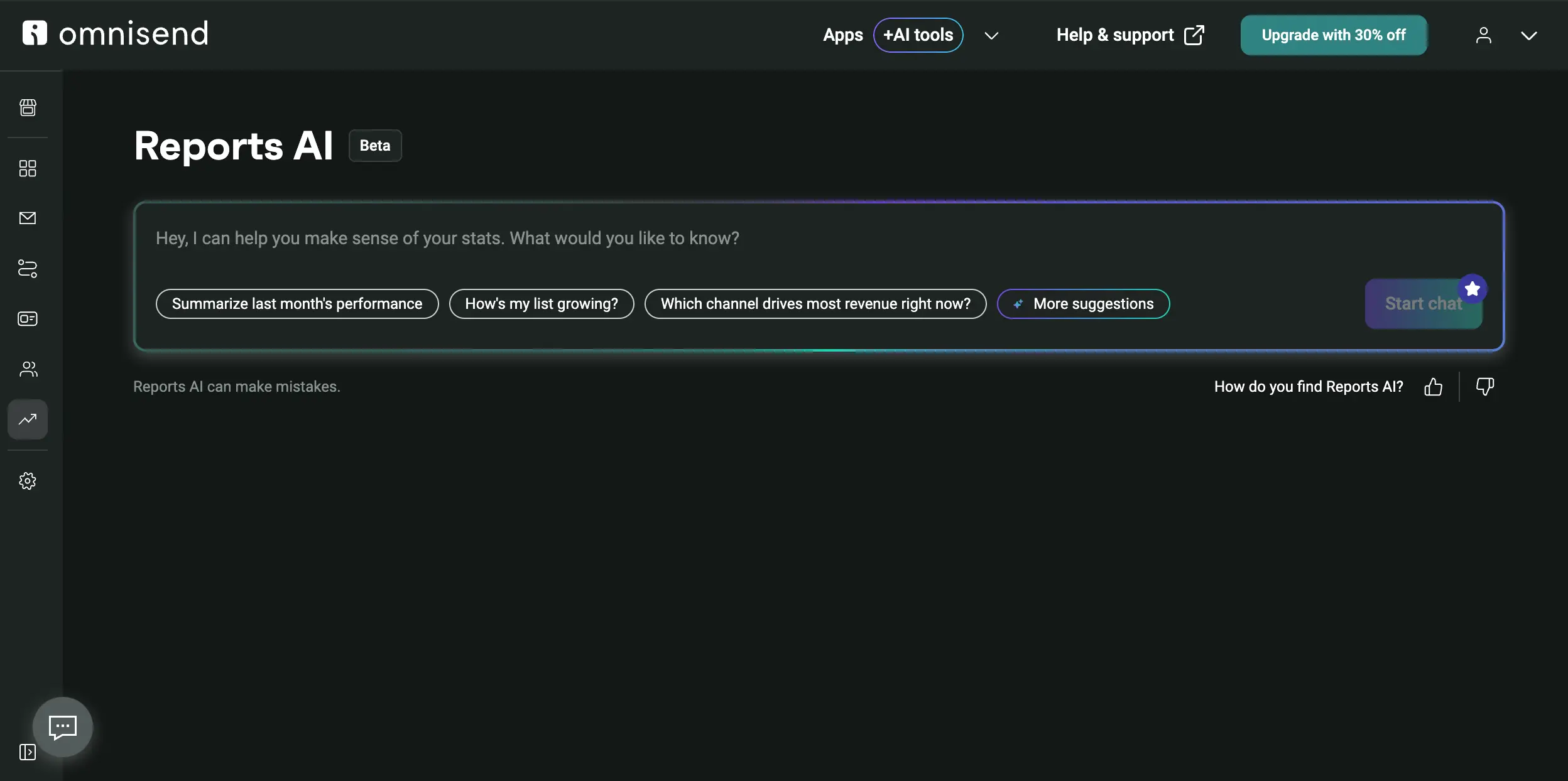
Alongside it: a Forms AI that designs a complete signup form from a prompt (redesigned July 2026), the AI segment builder, an AI product recommender, and — the one that made us grin, given what this site covers — an MCP integration that lets external AI assistants like Claude or ChatGPT query and manage your Omnisend account directly, extended through July 2026 to cover campaigns and full automation management. Every one of these works on the cheapest plans.
Who wins: Klaviyo is taking the bigger swings; Omnisend's AI does more for you on the cheapest Standard plan today. Call it Klaviyo by a nose for ambition, Omnisend for value delivered.
6. Ecommerce Integrations — Ecosystem vs Storefront Focus
Both platforms connect deeply to Shopify — data sync, product blocks, revenue attribution — and neither will leave a mainstream store stranded. The difference is shape. Klaviyo's directory spans 350+ pre-built integrations (the company's own 2025 investor-day figure), reaching well beyond storefronts into the surrounding stack: Meta and Google Ads audience syncing, Stripe payment data, review platforms, helpdesks, subscription tools. If your marketing lives across many systems, Klaviyo is likelier to have the connector waiting.
Omnisend's catalog is smaller and storefront-first: Shopify, Wix, WooCommerce, BigCommerce, PrestaShop, Ecwid, Big Cartel, nopCommerce, Shoplazza, and SureCart all connect natively, and the company added 16 new integrations in a single May 2026 release, so the gap is narrowing rather than widening. For a store whose stack is "my shop platform plus this email tool," the practical difference is close to zero.
Who wins: Klaviyo for ecosystem breadth. Effectively a tie if all you need is your store connected and syncing.
7. Support and Learning Curve — Omnisend's Quiet Advantage
This is the difference store owners feel weekly, and it runs opposite to the pricing hierarchy. Omnisend offers 24/7 live chat and email support on every plan, free tier included, and assigns a dedicated account expert once you spend $400/month. When the independent reviewers at EmailVendorSelection ran a live support test with a deliberately difficult technical question, they had a first response in two minutes and a full resolution within six hours. Klaviyo's free plan includes email support for your first 60 days only, after which you're on the help center and community; paid tiers get chat on weekday schedules, with round-the-clock coverage reserved for the top plans. Neither company offers phone support, whatever their sales pages imply.
The learning curve tilts the same direction, for a structural reason: Klaviyo simply contains more (the data platform, predictive segments, more channels), and reviewers consistently describe it as the platform that rewards study rather than the one you master in an afternoon. The template systems, for what it's worth, are a wash. Both ship polished, well-organized libraries you can judge for yourself:
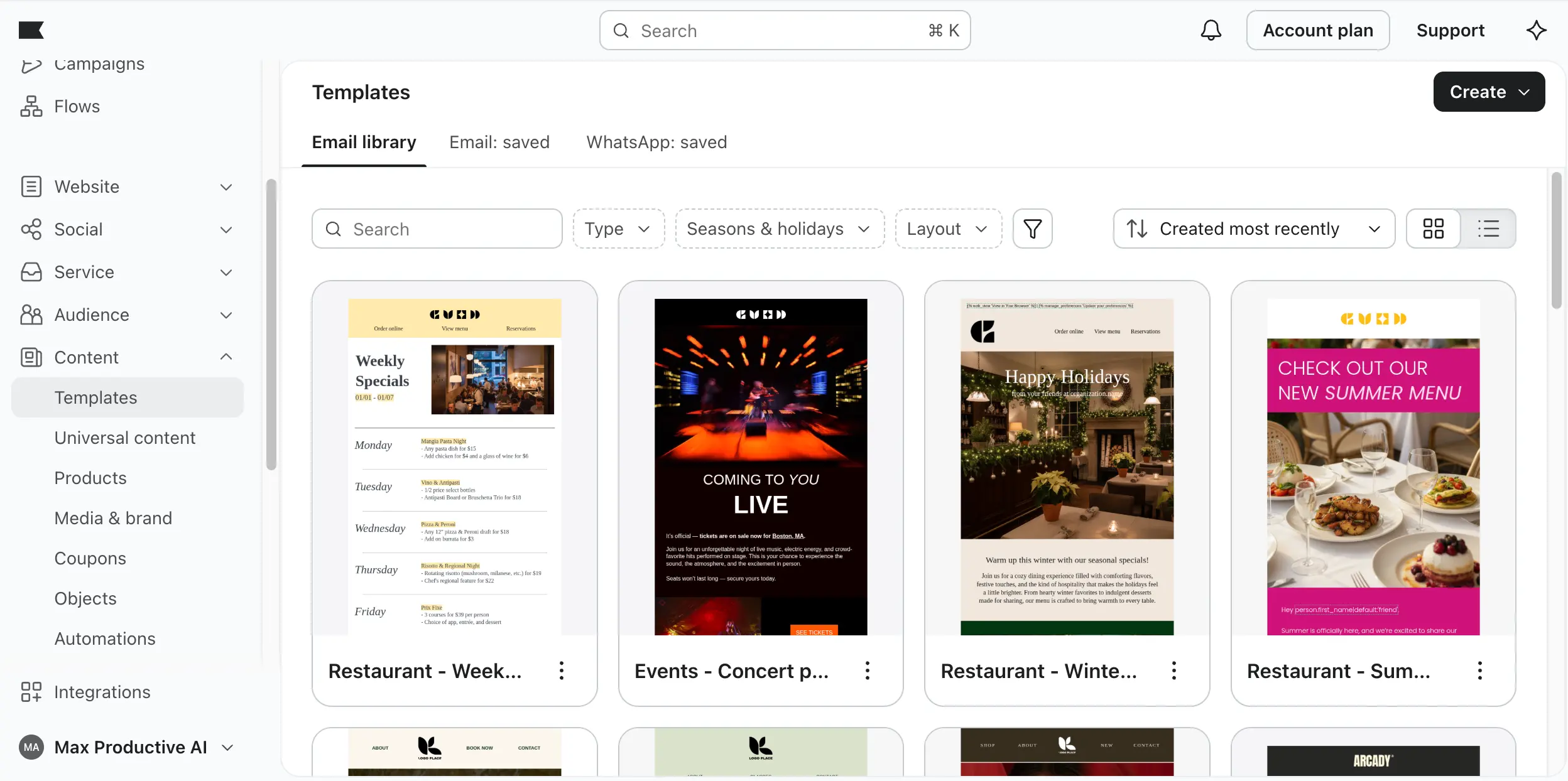
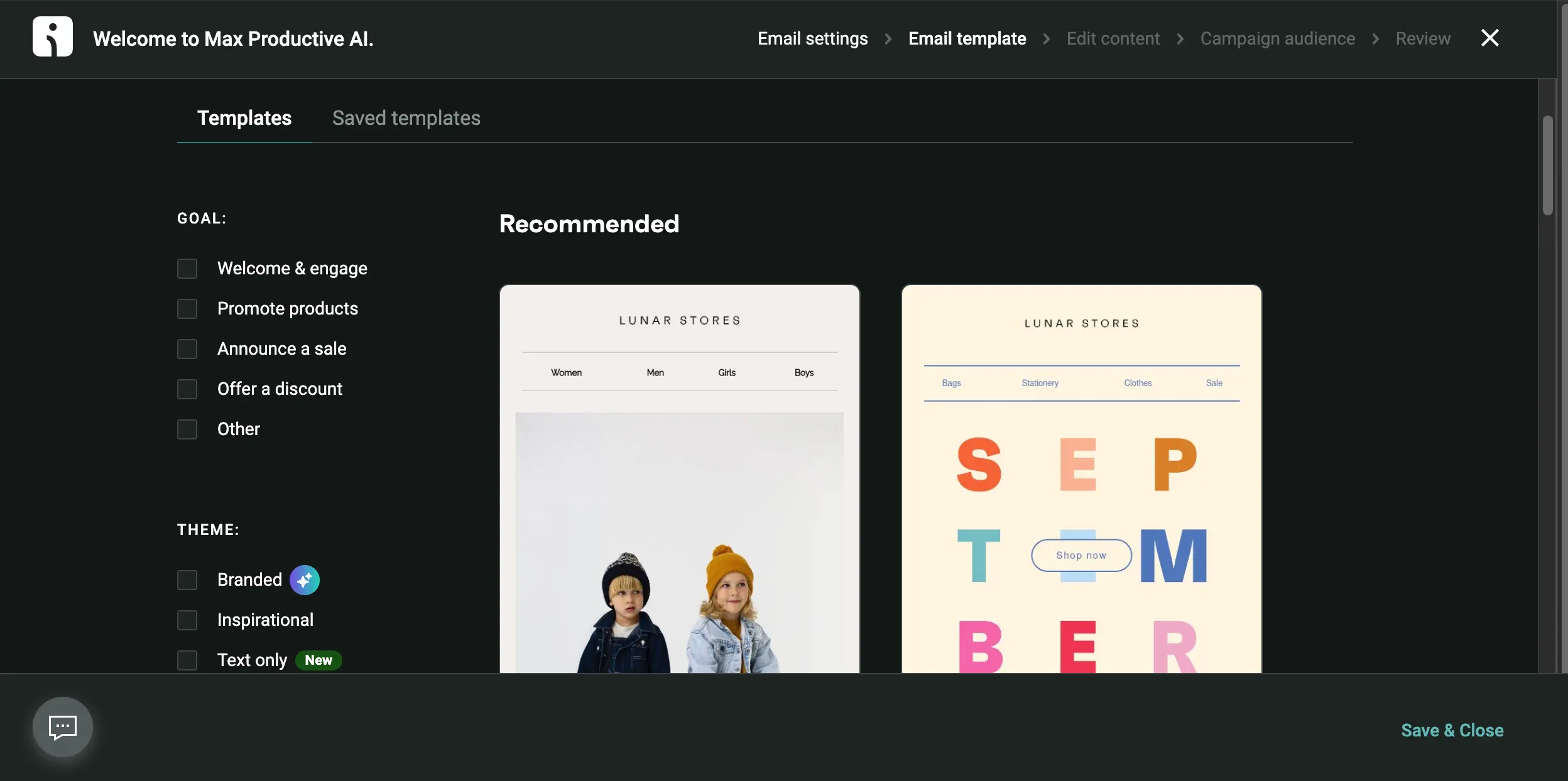
One more support-adjacent fact that matters if you're reading this as a Klaviyo customer eyeing the exit: Omnisend runs a free done-for-you migration on its paid plans — grant access, and its team moves your lists, segments, workflows, and templates over roughly five days.
Who wins: Omnisend, decisively. It's rare for the cheaper product to also carry the better support story, and it's the most underrated argument in this whole comparison.
What Reddit Users Actually Say About Klaviyo vs Omnisend
This exact question keeps resurfacing on Reddit — r/Emailmarketing, r/ecommerce, and r/shopify have hosted near-identical threads — “Omnisend vs Klaviyo for ecommerce?” among the most recent — from mid-2024 through March 2026, which tells you two things: real buyers genuinely struggle with this choice, and none of the existing articles has settled it for them.
The consensus across those threads is more coherent than Reddit usually manages. Klaviyo's defenders concede the cost and argue the insights and automations pay for themselves once a store scales — "Klaviyo scales better if you plan to grow and want deep segmentation control" is the recurring shape of the argument. Omnisend's advocates point at price, responsive support, and extras like its discount-spinner forms, usually from the perspective of smaller Shopify stores. And the loudest thread category since early 2025 is neither: it's Klaviyo customers describing bills that jumped under active-profile billing and asking how to port away, with threads titled things like "I have had enough" doing the summarizing for us. Notably, when those threads ask for alternatives, Omnisend is the name most often suggested — which matches where our own analysis lands for that store profile.
Weigh all of that as what it is: unverified individual experiences, not data. But the pattern has held across two years of threads, and it maps cleanly onto the documented differences above.
A Note on the Vendor Comparisons You'll Find in Search
Because Omnisend's own vs-Klaviyo page ranks prominently, it deserves a quick fact-check. Its central claim — that Omnisend costs less at matched sizes — is true, and our table confirms it. But the framing cuts corners. It describes Klaviyo's free plan as limited to "basic email features," when Klaviyo's own pricing page lists segmentation, an AI subject-line generator, mobile push, and a monthly mobile-messaging allowance on that tier. It also cites an ROI figure ($79 per $1 spent) with no independent methodology behind it, which is why that number appears nowhere else in this article. The same discount applies to Drip's comparison of the two: a competing platform grading its own rivals. None of these pages is useless — but every one of them was written to end with you in their checkout, and it shows in the edges.
How to Choose Between Klaviyo and Omnisend
Match the platform to your store's stage, not to feature lists. New store, or under roughly 500 customers with order history: choose Omnisend: Klaviyo's predictive features can't activate on your data yet, so you'd pay the premium for capabilities you can't use, while getting worse support in your most question-heavy months. Established DTC brand with deep purchase history and analytics appetite: choose Klaviyo: the predictive segmentation and flow triggers are real advantages nobody else in this price class matches. SMS-heavy and cost-sensitive: Omnisend's per-message rates and web push make the channel math easier. International audience on WhatsApp: Klaviyo, full stop. Currently on Klaviyo and squeezed by active-profile billing: first clean your list (suppressing dead profiles may shrink the bill enough to stay); if it doesn't, Omnisend's free migration removes most of the switching pain.
And where they're effectively tied, stop weighing: both drag-and-drop editors are modern and capable, both template libraries are strong, and both land in the top tier of EmailTooltester's 2026 deliverability round. Deliverability chatter shouldn't decide this one in either direction.
Final Verdict — Klaviyo vs Omnisend in 2026
| Best for most small & mid stores | Omnisend (lower cost, 24/7 support, free migration) |
| Best for data-rich, scaling brands | Klaviyo (predictive analytics, CDP, flow depth) |
| Best free plan in practice | Omnisend (web push, SMS credits, live chat) |
| Best channel breadth | Klaviyo (WhatsApp + mobile push) |
| Best 2026 AI on a budget | Omnisend (Reports AI + Forms AI on all paid tiers) |
| Most ambitious 2026 AI roadmap | Klaviyo (Composer, Customer Agent, K Social) |
Bottom line: this isn't a case of a good product versus a bad one — it's a premium product versus a value product, and the right answer depends on whether your store can use the premium yet. Omnisend wins for most small and mid-sized stores on price, support, and a free plan you can actually run a business on. Klaviyo wins for established brands whose order history unlocks its predictive engine, and for anyone who needs WhatsApp. Both offer free plans with no expiry date, so the cheapest way to settle it is the honest one: connect your store to each for a week and see which dashboard you keep coming back to.
Not Sold on Either? Other Email Platforms Worth a Look
If neither platform fits, the ecommerce email field is deeper than these two. Brevo (4.6/5) is the strongest budget all-rounder, with a built-in CRM and transactional email that neither Klaviyo nor Omnisend bundles. ActiveCampaign (4.7/5) beats both on pure automation sophistication if your business extends beyond a storefront. GetResponse (4.3/5) and Moosend (4.1/5) both undercut the pair on price for simpler needs, and non-affiliated options like Mailchimp and MailerLite remain serviceable for general-purpose email, though neither matches the ecommerce depth compared here. And if your list is more audience than customer base, a content brand monetizing a newsletter rather than a storefront, Beehiiv (4.1/5) plays a different game entirely. Our full email marketing directory covers all eleven tools we've reviewed, and for adjacent head-to-heads see Brevo vs Moosend, ActiveCampaign vs GetResponse, and Brevo vs GetResponse.