HeyGen vs Synthesia: Which One Deserves Your Money in 2026 (and What a Finished Video Really Costs on Each)
HeyGen and Synthesia both turn a script into a presenter video, and each publishes a comparison page that says the other one is for somebody else. We hold free accounts on both, checked every price on the two live pricing pages on September 11, 2026, and priced three real workloads instead of comparing feature lists. The short version, as of September 2026: HeyGen for creators and marketing teams, Synthesia for training and enterprise programs, with one exception that surprised us.

The short answer: as of September 2026, HeyGen is the better buy for creators, marketers, and small teams, and Synthesia is the better buy for L&D and enterprise programs. HeyGen's Creator plan costs $24 a month on annual billing, standard-avatar videos are unlimited on paid plans, and custom avatars come included rather than as an add-on. Synthesia earns the enterprise pick with SCORM export, SSO, workspaces with user roles, and a content-moderation layer, all built for teams that will sign an annual quote. One exception: a small team that needs SCORM and SSO on a company card, at a price it can read before calling anyone, should look at HeyGen Business, because it is the only one of the two sold that way.
Best for creators and marketers: HeyGen
HeyGen is the tool we rate higher overall, 4.6 out of 5, and the cheaper route to a watermark-free video. Creator buys unlimited standard-avatar videos up to 30 minutes long, 4K export, a large stock library, translation into far more languages than Synthesia's self-serve plans offer, and 600 credits a month for the premium features (Avatar IV, lip-synced translation, Video Agent). The trade: those premium features run on a credit meter that HeyGen does not convert into a fixed per-minute price on its pricing page. Its in-app cost estimate, shown before you generate, is your friend.
Best for training and enterprise teams: Synthesia
Synthesia (4.5 out of 5) is the calmer, more governed platform. Plans come as one editor plus guests, workspaces and user roles arrive at Enterprise, and so do SCORM 1.2 and 2004 export, SSO, and the 240+ stock avatar library. Every video passes through a moderation system whose red-team results the company published in August 2026. Self-serve plans start at $18 a month billed yearly for 10 minutes of video a month. What to know going in: minutes are metered and do not roll over, SCORM and SSO sit on the Enterprise tier, Enterprise is quote-only, and a studio-shot custom avatar is a paid yearly add-on.
| Tool | Built For | Entry Price (annual billing) | Custom Avatar | SCORM + SSO | Rating |
|---|---|---|---|---|---|
| HeyGen | Creators, marketers, small teams | Free; $24/mo (Creator) | 1 included from Free; 5 on Business | Business ($149/mo + $20/seat) | 4.6 / 5 |
| Synthesia | L&D and enterprise video programs | Free; $18/mo (Starter, 10 min/mo) | Personal avatar from Starter; studio avatar $1,000/yr | Enterprise (quote) | 4.5 / 5 |
Prices verified September 11, 2026 on synthesia.io/pricing and heygen.com/pricing. HeyGen publishes an annual price only for Creator; its Business figure is monthly billing. Confirm your exact price at checkout.
Search for HeyGen vs Synthesia, or Synthesia vs HeyGen, and the first organic result is HeyGen's own comparison page, which says HeyGen is the better choice for corporate training. A few results down, Synthesia's comparison page says HeyGen is for individual creators making quick self-serve clips. Synthesia also buys ads on the query, and the AI summary at the top is stitched together from a YouTube review and a handful of blogs. Every source on that page has a product to sell or a ranking to defend. We run an independent AI tools review site, we hold Max Productive AI workspaces on Synthesia and HeyGen, and every screenshot below is ours. Where we have not tested something ourselves, we say so and name the source.
HeyGen vs Synthesia Pricing: Same Job, Different Bill
As of September 11, 2026, Synthesia's Starter plan costs $18 a month billed yearly for 10 minutes of video a month. HeyGen's Creator plan costs $24 a month billed yearly for unlimited standard-avatar videos plus 600 credits a month for premium features. Those two sentences are the whole HeyGen vs Synthesia pricing question in miniature. The two companies charge for the same output in different units: Synthesia sells minutes, HeyGen sells a subscription and meters only its premium features. Put the two entry plans side by side without those units and you get the muddle that fills most comparison pages.
Synthesia's ladder is short and legible. Basic is free: 10 minutes a month, nine stock avatars, a Synthesia watermark, and no MP4 download, so it is for previewing, not publishing. Starter is $29 billed monthly, or the yearly rate above, for the same monthly allowance (pooled as 120 minutes a year on annual billing), 125+ stock avatars, 1080p export without the watermark, one personal avatar, and 48 minutes of AI dubbing a month. Creator is $89 a month, or $64 billed yearly, for 30 minutes a month (360 a year), 180+ avatars, five personal avatars, and API access. Enterprise is quote-only, and it is where unlimited minutes, the full avatar library, SCORM, SSO, brand kits, and the larger dubbing language list live. Two things to know before you buy. Minutes do not roll over, per Synthesia's help center. And the pricing page's own FAQ quotes Starter at $264 a year while the plan card's monthly figure works out to $216; we treat the plan card as the price and flag the FAQ figure so you can check it at checkout.
HeyGen's ladder has more rungs and one moving part. Free gives you three videos a month, each up to one minute, exported at up to 1080p with a watermark, plus one custom video avatar and up to three photo avatars, which is enough to check output quality with your own script. Creator matches Synthesia's Starter on monthly billing, or the yearly rate above: unlimited standard-avatar videos up to 30 minutes long, 4K export, no watermark, 700+ stock avatars, unlimited photo avatars, translation across 175+ languages and dialects, and the monthly Premium Credit allowance. Pro starts at $49 a month for 1,000 credits and scales through credit tiers to enterprise-sized allowances. Business is $149 a month for the first seat and $20 for each extra one, with 1,500 shared credits, 60-minute videos, five custom video avatars, SCORM export, SSO, and a brand kit. Enterprise is quote-only. HeyGen publishes an annual price only for Creator; Pro and Business show monthly billing on the page, so the tables below say which is which.
The moving part is the credit system, and HeyGen has been candid about it. In a product update in February 2026 the company renamed its generative credits Premium Credits, labeled every credit-consuming feature "Premium" inside the product, added a cost estimate before you generate, started suggesting credit-free alternatives when you run low, and made audio dubbing unlimited. That is a company reading its own support tickets. The upshot: standard Avatar III videos, audio dubbing, stock content, and Video Agent's Essential mode do not touch your credits on paid plans; Avatar IV, lip-synced video translation, the full Video Agent, AI avatar looks, and generated B-roll do. What the pricing page still does not publish is a fixed conversion of credits to minutes, because the cost depends on the model and the video. Treat the in-app estimate as the price tag and you will not be surprised.
| Synthesia plan | Monthly billing | Annual billing | Video minutes | Stock / personal avatars | AI dubbing | Notable limits |
|---|---|---|---|---|---|---|
| Basic (Free) | $0 | $0 | 10 min/mo | 9 stock; up to 3 personal | 10 min/mo | Watermark; preview or share link only, no MP4 download |
| Starter | $29/mo | $18/mo ($216/yr)* | 10 min/mo; 120 min/yr on annual | 125+ stock; 1 personal | 48 min/mo | 1 editor + 3 guests; 1080p; no rollover |
| Creator | $89/mo | $64/mo ($768/yr)* | 30 min/mo; 360 min/yr on annual | 180+ stock; 5 personal | 140 min/mo | 1 editor + 5 guests; API access; no rollover |
| Enterprise | Quote | Quote (billed annually) | Unlimited | 240+ stock; unlimited personal | Unlimited | SCORM, SSO, brand kits, workspaces and roles |
Verified September 11, 2026 on synthesia.io/pricing and help.synthesia.io. *Plan-card figures; the pricing page's FAQ quotes $264/yr for Starter and $804/yr for Creator, which do not match the cards. The Studio Express-1 custom avatar is a paid yearly add-on for annual plans only (see section 1); dubbing output-language counts differ by plan (see section 2).
| HeyGen plan | Monthly billing | Annual billing | Credits / month | Video length & resolution | Custom video avatars | Notable limits |
|---|---|---|---|---|---|---|
| Free | $0 | $0 | Limited trial credits | 1 min; up to 1080p | 1 (+ 3 photo avatars) | 3 videos/mo; watermark; 500+ stock avatars; 30+ translation languages |
| Creator | $29/mo | $24/mo ($288/yr) | 600 Premium Credits | 30 min; up to 4K | 1+ (extra as add-on, price not published) | 1 seat; unlimited standard videos; 700+ stock avatars; 175+ languages |
| Pro | From $49/mo | Not published (monthly shown) | 1,000, scaling by tier | 30 min; up to 4K | 1+ (extra as add-on) | 1 seat; credit tiers scale to enterprise-size allowances |
| Business | $149/mo + $20/seat | Not published (monthly shown) | 1,500 shared | 60 min; up to 4K | 5 | SCORM, SAML SSO, brand kit, credit packs and auto-reload |
| Enterprise | Quote | Quote | Custom | No max; 4K | Custom | Contact sales |
Verified September 11, 2026 on heygen.com/pricing and help.heygen.com. "Unlimited standard videos" refers to Avatar III generation on paid plans per HeyGen's February 2026 product update; Premium features (Avatar IV, lip-synced translation, Video Agent) consume credits at a rate that varies by model and video. The API is sold separately (pay-as-you-go from $5).
If the minute model suits your output, Synthesia's free Basic plan is the quickest way to see what a Starter subscription would feel like, watermark and all.
What a Finished Video Really Costs: Three Real Workloads
Feature tables do not tell you what you will pay, so we priced three workloads that match the people who actually run HeyGen vs Synthesia cost comparisons. Each row uses the cheapest plan that satisfies the workload, annual billing where a vendor publishes it, and live prices from September 11, 2026. Where a number is not published, we say so rather than guess.
| Workload | HeyGen | Synthesia | What decides it |
|---|---|---|---|
| Solo creator: four 3-minute videos a month (12 min), stock avatar, 1080p, no watermark | Creator, $24/mo annual ($288/yr); standard videos unlimited | Creator, $64/mo annual ($768/yr). Starter's 120 min/yr covers 10 min a month, not 12 | The minute wall. Trim to 10 min/mo and Synthesia drops to Starter at $18/mo |
| Marketing team: 3 people, 40 min/month with a webcam-made avatar, 10 of those minutes translated into 3 languages | Business, $189/mo on monthly billing ($149 + 2 × $20); 5 custom avatars; lip-synced translation on credits, per-minute credit cost not published | Creator, $64/mo annual, with two caveats: 1 editor + 5 guests rather than 3 editors, and 360 min/yr is 30 min/mo, short of 40; overage price not published | Seats. Synthesia's self-serve plans are one-editor plans; HeyGen Business is per-seat |
| L&D team: 10 seats, 100 min/month, SCORM export and SSO required | Business, $329/mo on monthly billing ($149 + 9 × $20); SCORM and SSO included; 1,500 shared credits, standard videos unlimited | Enterprise, quote only (SCORM and SSO are Enterprise features) | Published price versus quote. Only HeyGen shows a number |
Verified September 11, 2026. HeyGen Business annual pricing is not published, so its rows use monthly billing; Synthesia rows use annual billing. Enterprise quotes on either side may beat these figures at volume.
Two things jump out. First, at the solo end the gap is a plan tier, not a few dollars. HeyGen charges $288 a year for unlimited standard videos; Synthesia's equivalent comfort level costs $768, because 12 minutes a month is 24 minutes a year over Starter's annual pool. If your videos are short and few, Synthesia's Starter is the cheapest watermark-free option of the two and it includes a personal avatar, which is a real point in its favor. Second, at the team end the comparison stops being about price and becomes about procurement. HeyGen will sell a ten-seat team SCORM and SSO for $329 a month on a card. Synthesia will sell it on a quote. Neither is wrong; enterprise buyers often want the quote, the security review, and the account manager. But if your budget approval needs a public number, only one of these two gives you one.
1. Custom Avatars: Included, Metered, or a Yearly Add-On
Both platforms let you become the presenter, and the naming matters because the prices hang off it. As of September 2026, a webcam-made avatar of yourself is included on Synthesia's Starter plan and above and on every HeyGen plan, Free included; a studio-shot Synthesia avatar is a $1,000-a-year add-on for annual plans. Synthesia calls the webcam version a Personal Avatar: one on Starter, five on Creator, unlimited at Enterprise, and the free plan lists up to three. The studio version, Studio Express-1 on the pricing page, takes up to ten days to process. That fee is real, and it is the line item that most often surprises Synthesia buyers, so it belongs here rather than in a footnote.
HeyGen's pricing page uses one umbrella term, Custom Video Avatar: one is included on Free, one or more on Creator and Pro with extras sold as an add-on whose price the page does not show, and five on Business. Photo avatars, made from a single image, are capped at three on Free and unlimited on paid plans. Avatar IV is HeyGen's newer engine rather than an avatar type, and it is a Premium feature, so it draws on your credit allowance on web plans; through the API it costs roughly three to five dollars a minute depending on avatar type and resolution. The names Digital Twin and Studio Avatar appear only in HeyGen's API documentation, so a review that quotes them is describing the API product.
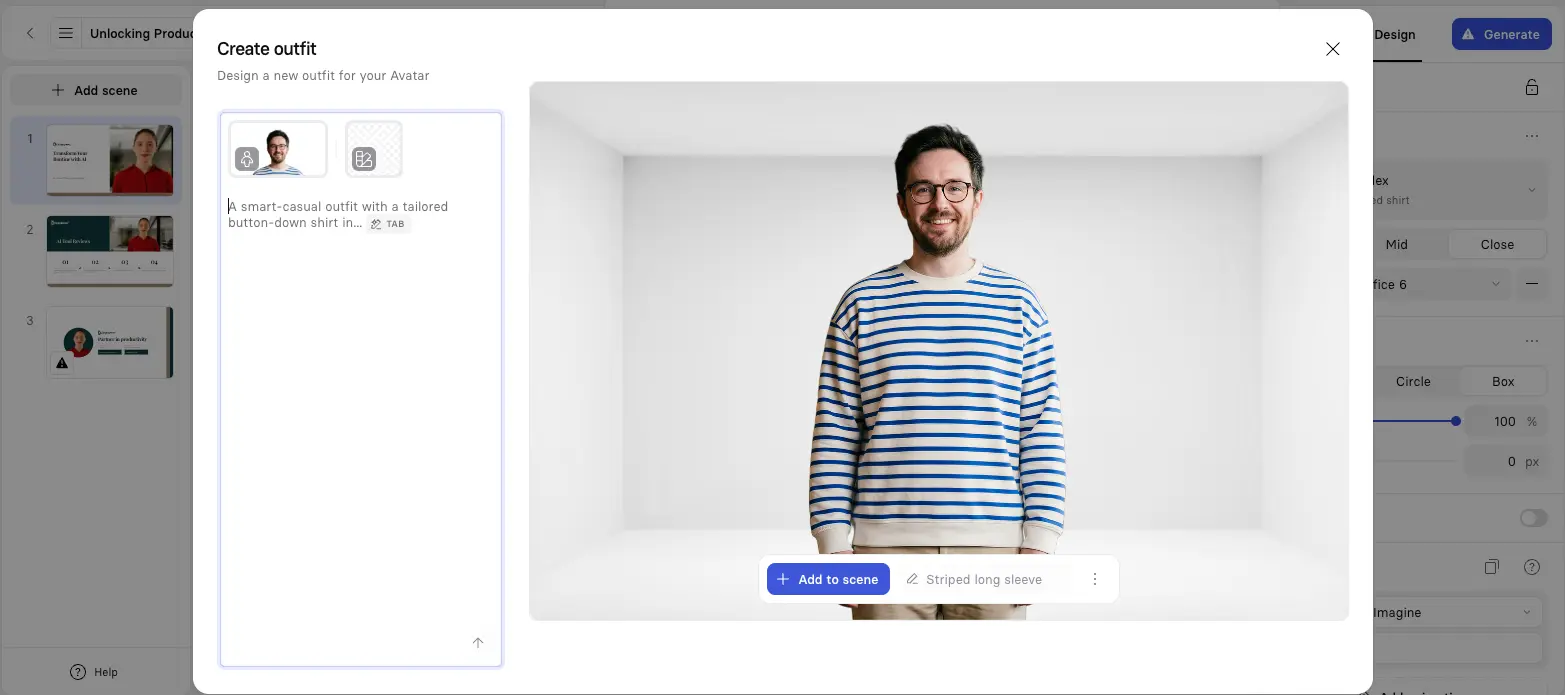
Which one looks better is the question everyone asks and the one no article can settle for you. A Reddit thread in r/texttovideo from around June 2026 about corporate training videos gave HeyGen the edge on realism and found Synthesia's avatars stiff after a few viewings. A YouTube review from June 2026, one of the sources behind Google's AI summary, noticed the opposite trend: Synthesia's lip sync and hand movements have improved, though every avatar still sits square to the camera. Trustpilot reviewers in April 2026 praised the realism of Synthesia's newer avatars and voices. Read those together and the pattern holds: HeyGen for expressive close-ups, Synthesia for controlled, consistent delivery. Both free plans let you test your own script, and that ten-minute test is worth more than every comparison page combined, this one included. Our HeyGen review walks through the avatar types in more detail.
2. Languages, Translation, and Dubbing: Read the Plan, Not the Homepage
This is where marketing numbers and pricing pages part ways, on both sides. As of September 2026, HeyGen quotes 175+ languages and dialects for its Global Language Suite on Creator and above, and only 30+ on Free. Synthesia's features pages say 140+ languages for AI dubbing, its docs and the in-app dubbing screen say 130+, and its pricing page shows 70+ output languages on Basic, Starter, and Creator, with the full list reserved for Enterprise. None of those figures is false; they count different things (voices, dubbing targets, regional locales) on different plans. The number that governs your account is the one on the pricing row for your plan.
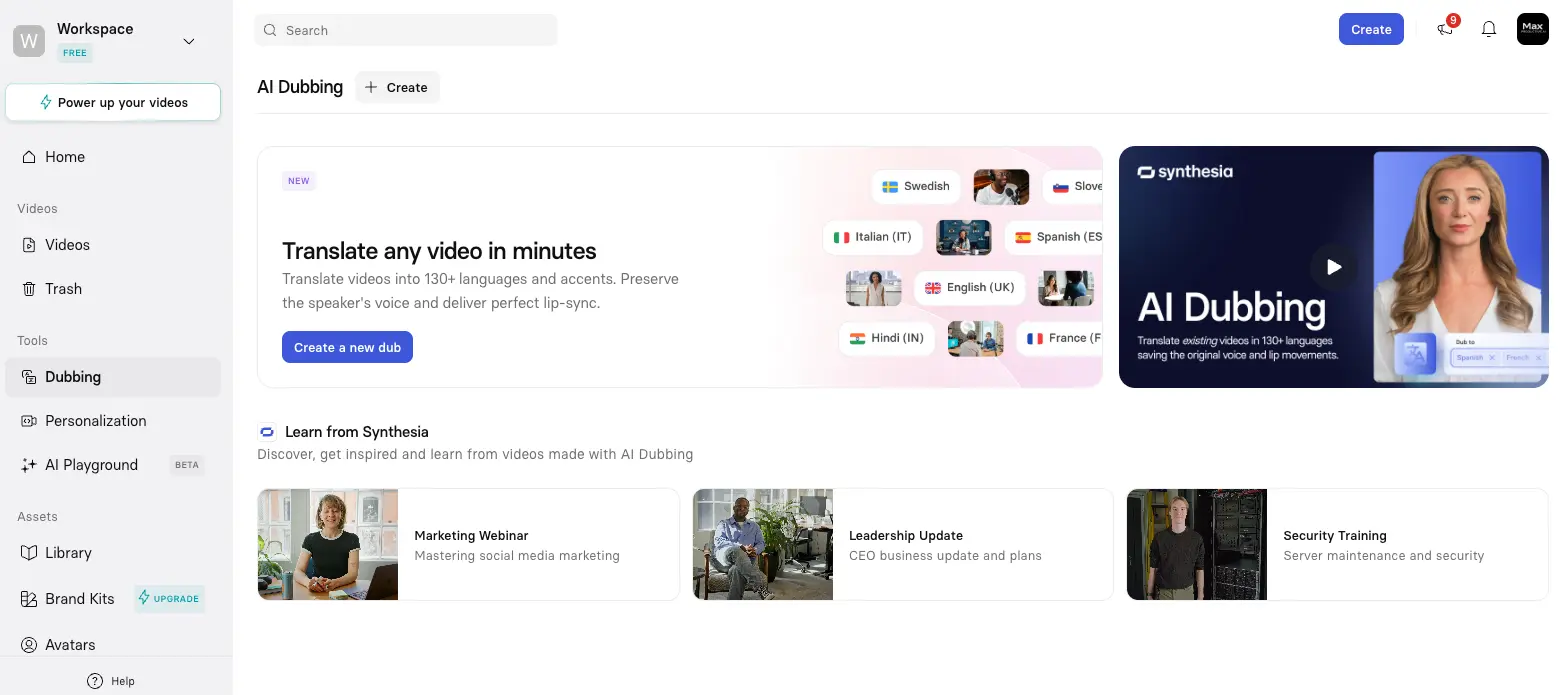
In our free Synthesia workspace, the dubbing tool advertises translation into 130+ languages and accents with the speaker's voice preserved and lip-sync applied, and the monthly dubbing allowance climbs from ten minutes on Basic to 48 on Starter and 140 on Creator. HeyGen made audio dubbing unlimited on paid plans in February 2026; lip-synced video translation stays a Premium feature that consumes credits. One test to run on either tool before you localize a course: an independent hands-on test published in August 2026 found Synthesia's lip-sync convincing but left on-screen captions and graphic text untranslated in a Hindi output. That kind of gap is what a pilot is for.
3. Enterprise Readiness vs Creator Tooling
As of September 2026, SCORM export and SSO are Enterprise-only on Synthesia and included on HeyGen's Business plan, and that one line settles more training-team decisions than any avatar demo. Synthesia's whole product is organized around a video program rather than a video. Plans come as one editor plus guests, workspaces and user roles arrive at Enterprise, SCORM 1.2 and 2004 export sits there too (Synthesia's own August 2026 post on SCORM says so plainly), and every piece of content passes through moderation. That last point cuts both ways. The company published a red-team exercise in August 2026 in which its moderation systems held up against more than 75 attempts to generate policy-violating content, which is exactly what a compliance team wants to read. Trustpilot reviews in March and September 2026, meanwhile, describe scripts blocked by rules that were not obvious in advance. If your topics are medical, financial, legal, or otherwise sensitive, run a test script on the free plan first; appeals are reviewed within about 48 hours, but only for paid plans.
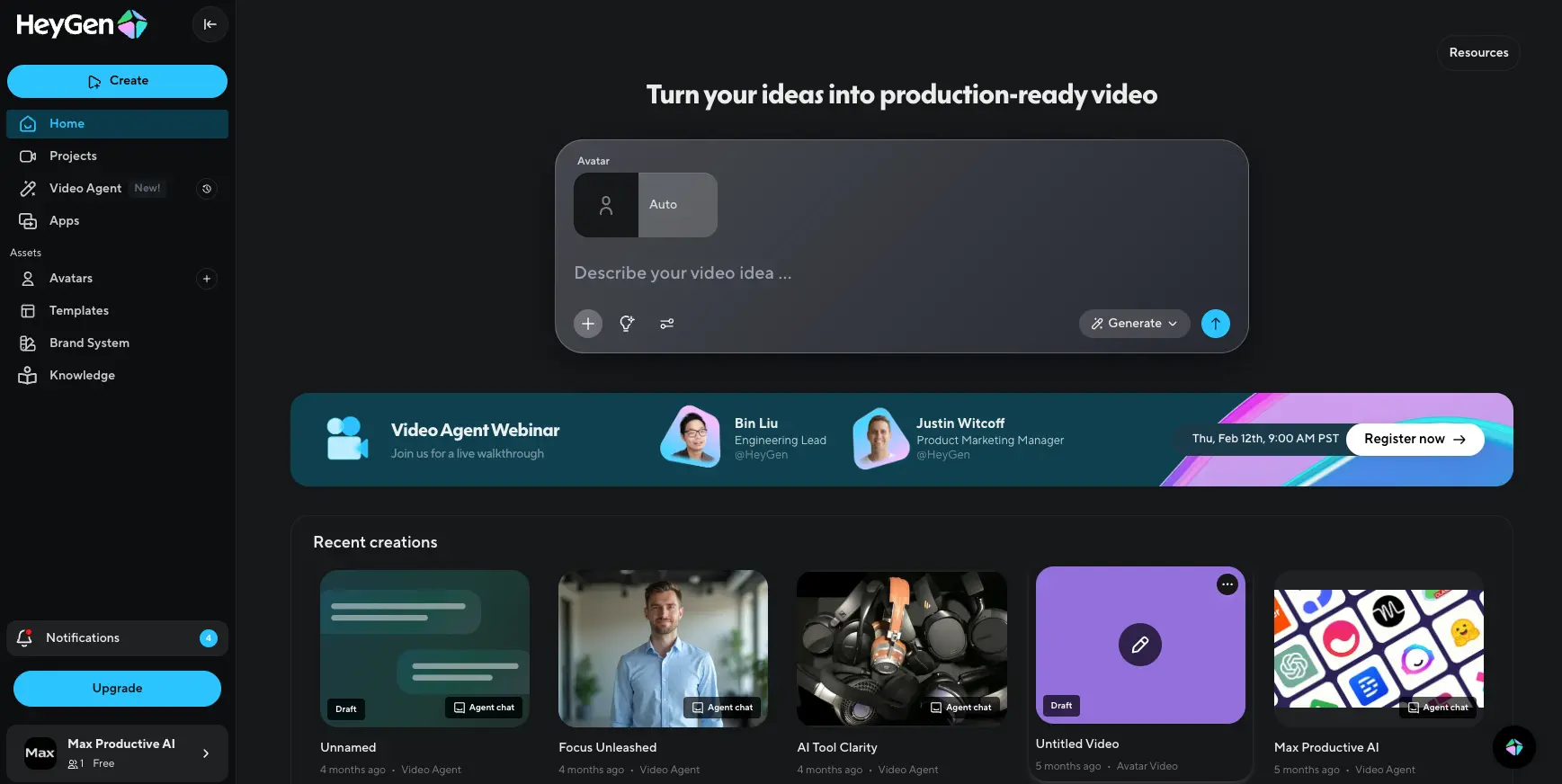
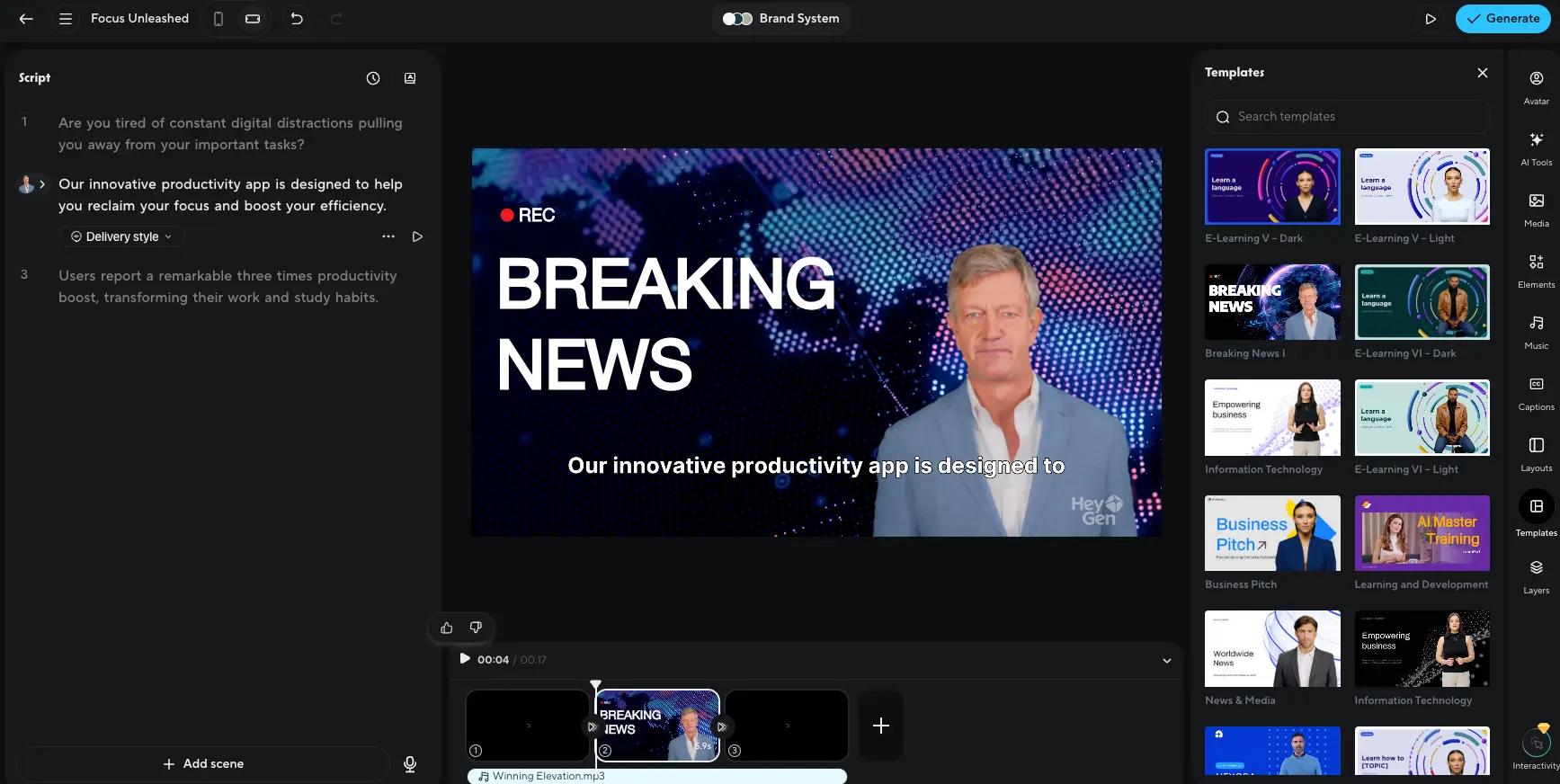
HeyGen is organized around getting a video out of your head quickly. The home screen of our workspace is a prompt box: describe the video, pick an avatar or let Video Agent choose one, and it drafts scenes, script, and B-roll. The AI Studio editor underneath is a proper scene-based editor with a template library (e-learning, breaking news, business pitch, learning and development, IT), a Brand System toggle, per-line delivery styles for the avatar, captions, music, layouts, and an interactivity panel. Team and compliance features exist but arrive at Business: SCORM export, SAML SSO, a shared brand kit, hour-long videos, and five custom avatars, at a published monthly price per seat. That is the plan a training team on a budget should hold up against Synthesia's Enterprise quote, and it is why we cannot hand the enterprise pick to Synthesia unconditionally.
4. API Access: A Feature on One Side, a Product on the Other
Developers get treated differently. As of September 2026, Synthesia includes API access from the Creator plan, with API renders drawing on the same minute pool as the editor, up to the plan's 360 minutes a year, and extra usage sold as an add-on whose price is not published; Enterprise lifts the ceiling. HeyGen sells its API as a separate product with its own wallet. Pay-as-you-go starts with a $5 top-up and no subscription; standard Avatar III video runs roughly a dollar per minute at 720p or 1080p per HeyGen's help center, with higher rates for Avatar IV, video translation, and Video Agent; an Enterprise tier bills at $0.50 a credit. A Creator, Pro, or Business web plan does not include API usage. For a developer building a pipeline, that is a cleaner model than sharing minutes with the marketing team. For a one-person shop that wants the editor plus a little automation, Synthesia's bundled approach costs less to start. A GitHub discussion from August 2026 asking which of the two works better for developer tutorials is a fair sign of who is asking.
5. Editor Workflow and Learning Curve: What Our Free Accounts Show
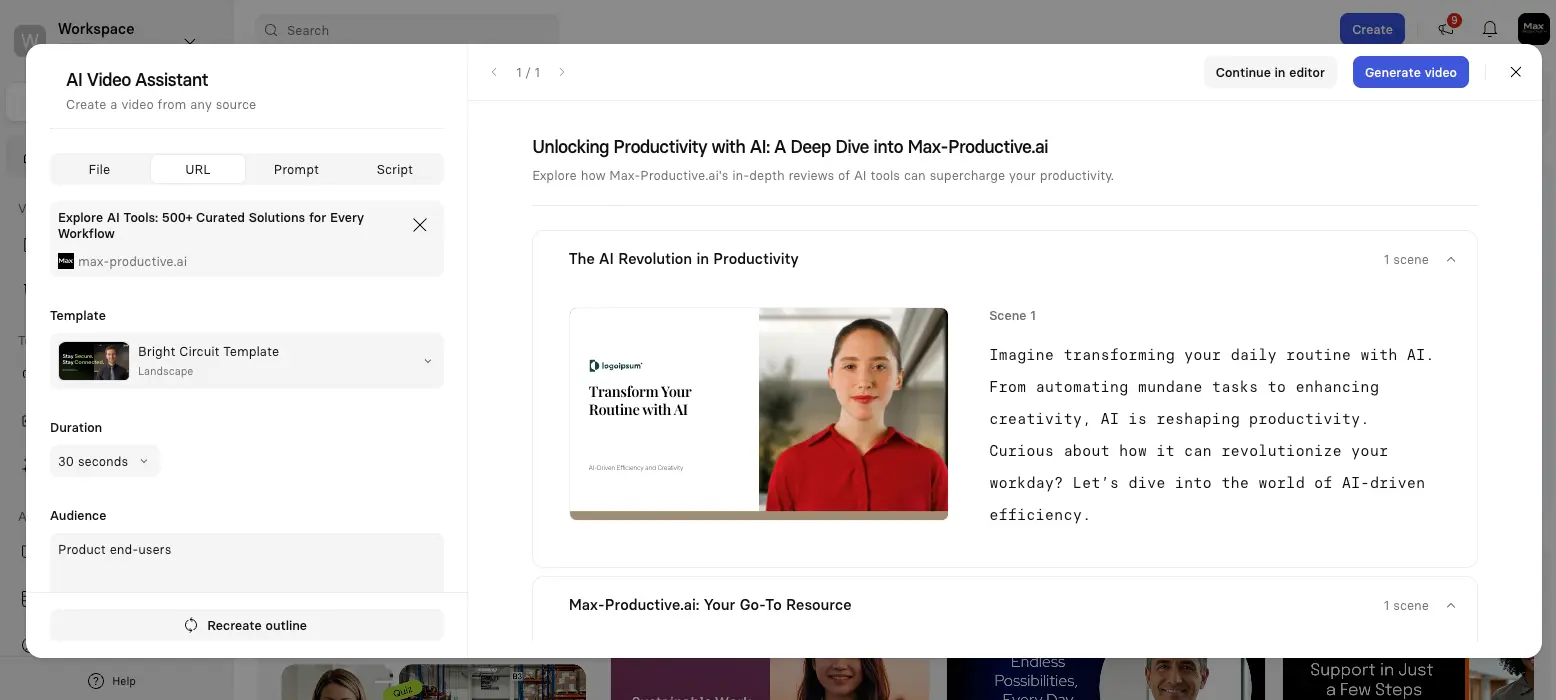
Both editors are easy to start and different to live in. Synthesia's AI Video Assistant takes a file, a URL, a prompt, or a script. We pointed it at our own homepage and it produced a titled, scene-by-scene outline in a chosen template, duration, and audience before we touched the editor, a friendly on-ramp for anyone who has never storyboarded a thing. HeyGen's editor starts with the script in a left panel, one line per scene, with a delivery-style control on each line and a scene strip along the bottom, which suits people who think in scripts and want a say in how each sentence is performed. Neither is hard. Synthesia is more guided; HeyGen is more hands-on, and the flip side is a busier screen.
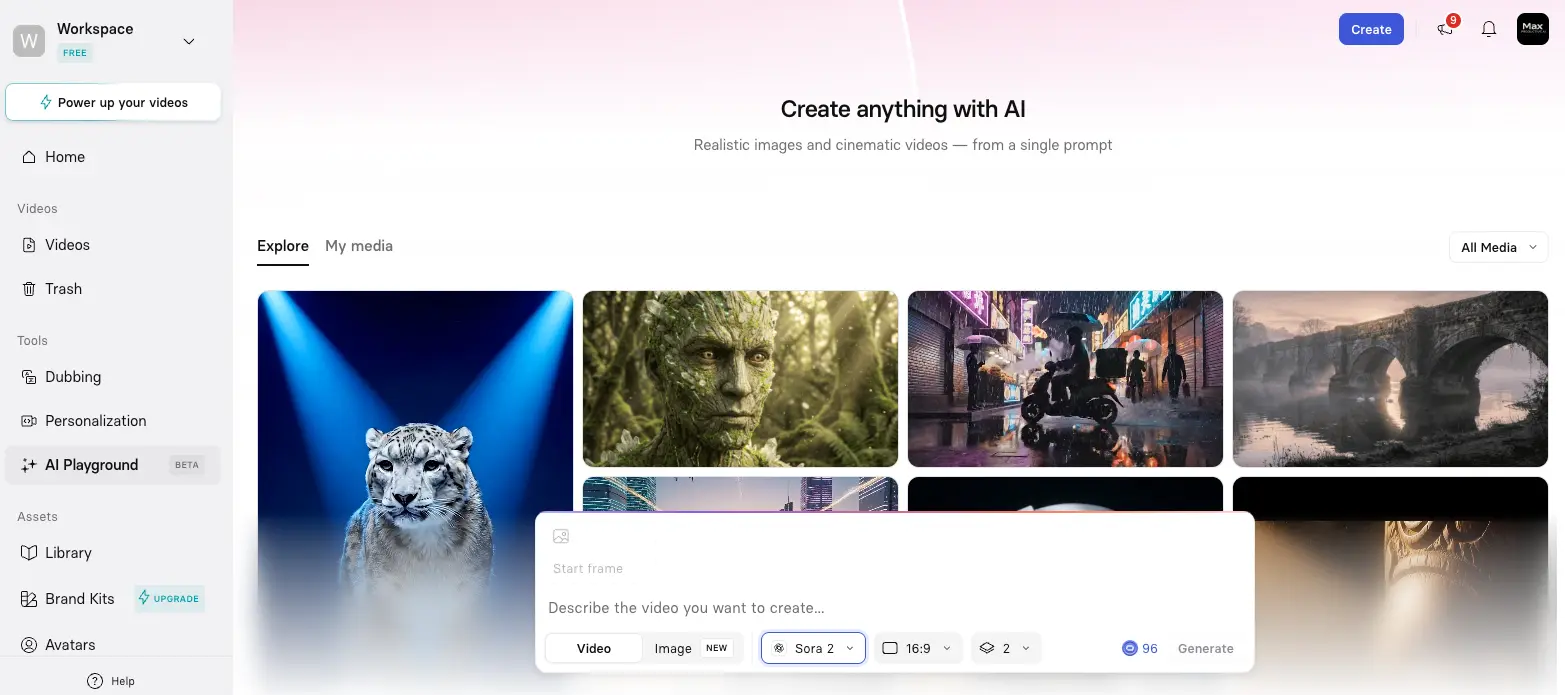
One more thing in Synthesia's sidebar: AI Playground, a beta text-to-video and image space with nothing to do with avatars. When we took the screenshot below in April 2026, OpenAI's Sora 2 was the selected model. OpenAI shuts the Sora API down on September 24, 2026, and Synthesia's current documentation lists Google's Veo 3.1 models and Gemini instead, so expect that menu to look different by the time you read this. It is a pleasant extra for B-roll, not a reason to pick Synthesia over HeyGen, which offers generated B-roll (Veo 3.1 among the models) as a Premium feature of its own. If Sora's exit touches your own workflow, our Sora alternatives guide covers where people went.
What HeyGen's and Synthesia's Own Comparison Pages Get Right, and What to Double-Check
Both vendors publish a page for this exact search. Both are sales pages, which is fair enough, and reading them against the live pricing pages turns up the gaps you would expect.
HeyGen's page leads with 1000+ avatars, avatar quality that "eliminates" the uncanny valley, and a verdict that HeyGen is the better choice for corporate training. The quality point has support: independent reviews from July and August 2026 and the Reddit thread above lean HeyGen on close-up realism. "Eliminates" is a strong word for a problem nobody has fully solved, and Google's own summary leans the other way on natural movement, so test it. The avatar count is higher than the 700+ stock avatars HeyGen's own pricing page lists for Creator and Pro, most likely because it counts other avatar types; the pricing row is the number you get. And the corporate-training verdict skips the part a training team cares about most, which is that SCORM and SSO start at Business, not Creator. HeyGen also still hosts an older blog comparison, last updated August 19, 2025, that quotes a Synthesia "Personal" plan at $30 and a HeyGen "Pro" plan at $225; neither plan exists on either pricing page today, so skip it for prices.
Synthesia's page positions Synthesia as the secure, collaborative platform for business and frames HeyGen as a tool for individual creators making quick self-serve clips. The first half is fair: workspaces, roles, moderation, SCORM, and SSO are real, and they are what Synthesia is for. The second half undersells HeyGen's Business plan, which offers SCORM, SSO, a brand kit, five custom avatars, and hour-long videos at a public price. A version of Synthesia's comparison still reachable under HeyGen's former name, Movio, lists HeyGen at 100+ stock avatars with no custom web avatars and no collaboration; HeyGen's pricing page today says otherwise on all three. Synthesia's ads on this query quote 240+ avatars and 160+ languages; those are top-tier figures, and a Starter subscriber gets 125+ avatars and 70+ dubbing languages. None of this is deception. It is marketing, and it is why an independent price check exists.
For what it is worth, Google's AI summary lands where we do, HeyGen for creators and marketers, Synthesia for corporate training teams, but it gets there without a single price. The price is where the exceptions live.
HeyGen vs Synthesia Reddit Threads and Reviews: What to Check Before You Subscribe
Both products have a learning curve on billing, and dated threads describe it well. We have kept the loaded language out and turned the recurring themes into two checklists.
HeyGen's threads from January through May 2026 circle the same five topics: how far the free plan's trial credits stretch, what "unlimited" covers on paid plans, how API credits are calculated, whether a failed render consumes credits, and how legacy Team and unlimited plans migrate to the Business structure. An r/AI_UGC_Marketing thread from early 2026 asking why there is such a price gap between HeyGen, Synthesia, and Creatify shows the questions the credit model raises for first-time buyers. HeyGen's February 2026 update answered a fair share of them, and what follows is what remains on the buyer's side.
Before you subscribe to HeyGen: read the in-app cost estimate before every Premium generation and treat it as the price; confirm which features are unlimited on your plan (standard Avatar III videos, audio dubbing, stock content, Video Agent Essential) and which are Premium; if you are on a legacy plan, read the migration terms before your renewal date; keep the API in a separate budget, since web plans do not include it; and use the free plan's three one-minute videos to judge output on your own script before paying.
Synthesia's signal is quieter and mostly about policy rather than product. Its help center, updated in June, July, and September 2026, states that purchases are non-cancelable and non-refundable, including an annual renewal that goes unused, that self-serve cancellation is available on Starter and Creator only, and that access and stored videos end with the billing period. Trustpilot reviews in March and September 2026 mention content-moderation blocks that were not obvious in advance, and a May 2026 r/instructionaldesign post found the avatars a little distracting for onboarding videos, while April 2026 reviewers praised the newer avatars' realism and the support team's responsiveness. A July 2026 review citing the same subreddit flagged PowerPoint-to-video conversion as weaker than videos built natively in the editor.
Before you subscribe to Synthesia: size the plan to your busiest month, because minutes do not roll over and annual plans pool them per year; put the renewal date in your calendar, since unused annual renewals are not refunded; export your videos before you cancel; run a sensitive-topic script through the free plan to see how moderation treats it; build in the editor rather than importing slide decks when quality matters; and remember the free plan is preview-only, with no MP4 download. None of that should stop a training team; it should just be known before the card goes in. Start on Synthesia's free plan and run that test first.
How to Choose Between HeyGen and Synthesia
Match the tool to the job, not to the feature list. You make videos for social, sales, or a YouTube channel: HeyGen Creator. You want the cheapest watermark-free plan and ten minutes a month is enough: Synthesia Starter. You need a webcam avatar of yourself on a budget: either; Synthesia includes one on Starter, HeyGen on every plan. You need a studio-grade avatar: budget for Synthesia's studio-avatar add-on or HeyGen Business's five included custom avatars. You are a marketing team of three to ten: HeyGen Business, unless one editor plus reviewers is your real shape, in which case Synthesia Creator is far cheaper. You run an L&D program with an LMS, a security review, and a procurement process: Synthesia Enterprise; get the quote. You run the same program on a card without a procurement team: HeyGen Business. You are a developer: HeyGen's pay-as-you-go API to start, Synthesia's bundled API if you already pay for Creator. You are torn between HeyGen or Synthesia for translation: check the language count on your plan's pricing row, not the homepage, and pilot with captions.
If Neither Fits: Alternatives Worth a Look
If avatars are the point but the price or the platform is not, our best AI avatar generators roundup ranks the wider field. Two stand out for different jobs. Hedra (4.2/5) makes an expressive talking head from a single image and a voice track, which is the cheap, fast route for social clips. Fliki (4.3/5) turns text into faceless or avatar videos with strong voice options and fits creators who never wanted to be on camera in the first place. If your bottleneck is editing rather than presenting, InVideo AI (4.3/5) generates whole videos from a prompt and Veed (4.2/5) is the browser editor with an avatar feature built in; our Veed vs CapCut comparison covers that corner.
Sources and dates: plan prices, limits, and features from synthesia.io/pricing, help.synthesia.io, docs.synthesia.io, heygen.com/pricing, heygen.com/api-pricing, and help.heygen.com, all accessed September 11, 2026; Synthesia's price history from Wayback Machine captures between May and August 2026; HeyGen's credit changes from its February 2026 product update and its January 2026 Business launch post; Synthesia's SCORM and red-team posts from August 2026; user signals from Reddit (r/texttovideo, r/AI_UGC_Marketing, r/instructionaldesign), Trustpilot (March, April, and September 2026), a GitHub discussion (August 2026), and independent reviews published in July and August 2026. We re-verify prices on the day we publish and update this article when either pricing page changes.
Final Verdict — HeyGen vs Synthesia in 2026
| Creators, marketers, small teams | HeyGen Creator ($24/mo annual, unlimited standard videos, our 4.6/5) |
| L&D and enterprise programs | Synthesia Enterprise (SCORM, SSO, workspaces, moderation; quote-only; our 4.5/5) |
| Cheapest watermark-free plan | Synthesia Starter ($18/mo annual, 10 min/mo, one personal avatar included) |
| SCORM + SSO at a published price | HeyGen Business ($149/mo first seat + $20/seat, monthly billing) |
| Studio-grade custom avatar | Synthesia Studio Express-1 ($1,000/yr add-on) or HeyGen Business (5 custom avatars included) |
| Translation at scale on a self-serve plan | HeyGen Creator (175+ languages; lip-synced translation on credits) |
| Developers | HeyGen API (pay-as-you-go from $5, about $1/min for standard video) |
| Free plan for testing | HeyGen for a file you can keep (3 one-minute videos, watermarked); Synthesia for previewing avatars (10 min/mo, no download) |
Bottom line: as of September 2026, HeyGen is the better buy for anyone whose videos are for an audience outside the company, and Synthesia is the better buy for anyone whose videos are a program with an LMS, a security review, and a budget owner. The gap at the entry level is a plan tier, not a few dollars, because Synthesia meters minutes and HeyGen meters only its premium features. The real decision is whether you want a published price or a quote. Whichever way you lean, spend one afternoon on both free plans with the same script. The avatar you can stand to watch for five minutes is the one to pay for.